

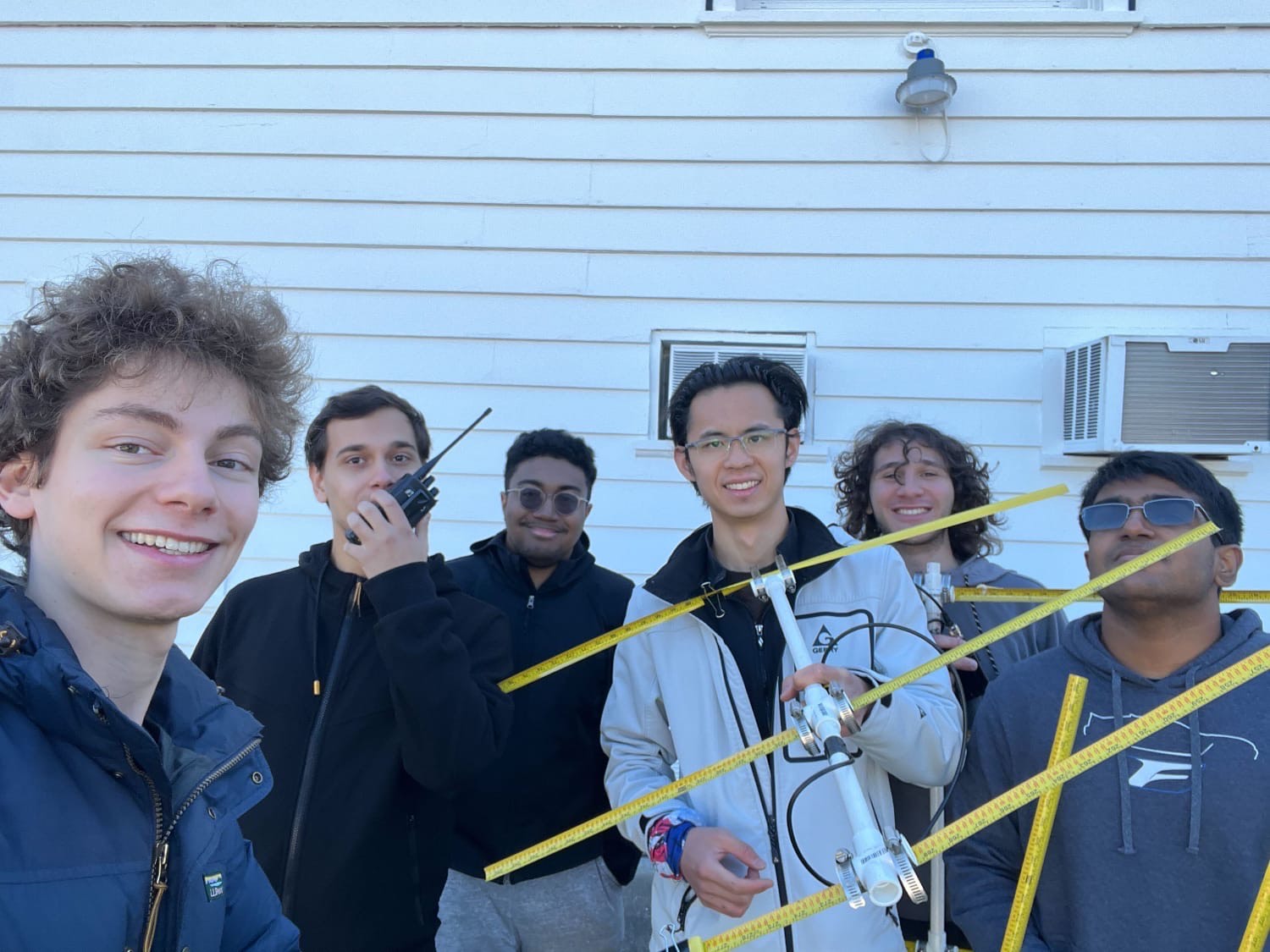
After many years of hard work, the Case Amateur Radio Club W8EDU has finally received the American Radio Relay League (ARRL) DX Century Club (DXCC) Trident Award, making them the first collegiate club to do so.
They qualified for the award on Oct. 26, 2025 at the end of the CQ World Wide DX Contest. The contest lasted for 48 hours and allowed participants from all over the world to connect with each other. The contest, however, wasn’t the whole process; it only marked the end of a long journey for the club.
“It’s been years in the making,” third-year student and Case Amateur Radio Club President Tobias Heller said. “Some of these contacts could be as old as 15 years, but I would say we’ve made a recent effort in the past three.”
In order to receive the award, the club had to make 100 contacts, also known as two-way radio communications, in three different radio modes: voice, digital and morse code. Each contact comes from a different place, and different countries and territories have their own station. In order for a station to count in their list, the club had to make a successful exchange with them. Contacting stations was a lot easier for the club during the contest due to the vast number of participants and stations active at the time.
“In a contest, you can either be the hunter or the hunted,” Heller said. “Generally, we’re more of the former. We’ll select a band that will reach, let’s say, Northern Africa. If it’s clear, point the antenna there, and we’ll see who we hear and make contact. Generally, someone there will be calling, and assuming we have a successful exchange, our call sign, signal strength and our International Telecommunication Union (ITU) region [is shared]. Once we exchange that information, both sides write it down in a software program, and you’ve made the contact.”
During the contest, the club completed its final 10 contacts. Their exchange with the Island of Saint Bartholomew was the final one that brought the total to 100. However, it wasn’t always easy for them to make connections.
“Generally, there’ll be a lot of people on the band,” Heller said. “This is where it helps to have a good antenna because you want your signal to overwhelm someone else’s signal. So the person on the other end, when there’s 10 call signs coming in, they pick you. You just got to keep trying and trying and trying.”
In the end, the team successfully accomplished their long-awaited goal. With the ARRL offering an additional award for completing 200 contacts in each category, the club now has a new milestone to pursue. Beyond that, members will continue focusing on core club activities, including communicating with operators around the world, participating in off-campus events such as fox hunts, expanding their membership and working on projects to test and develop new radios.