


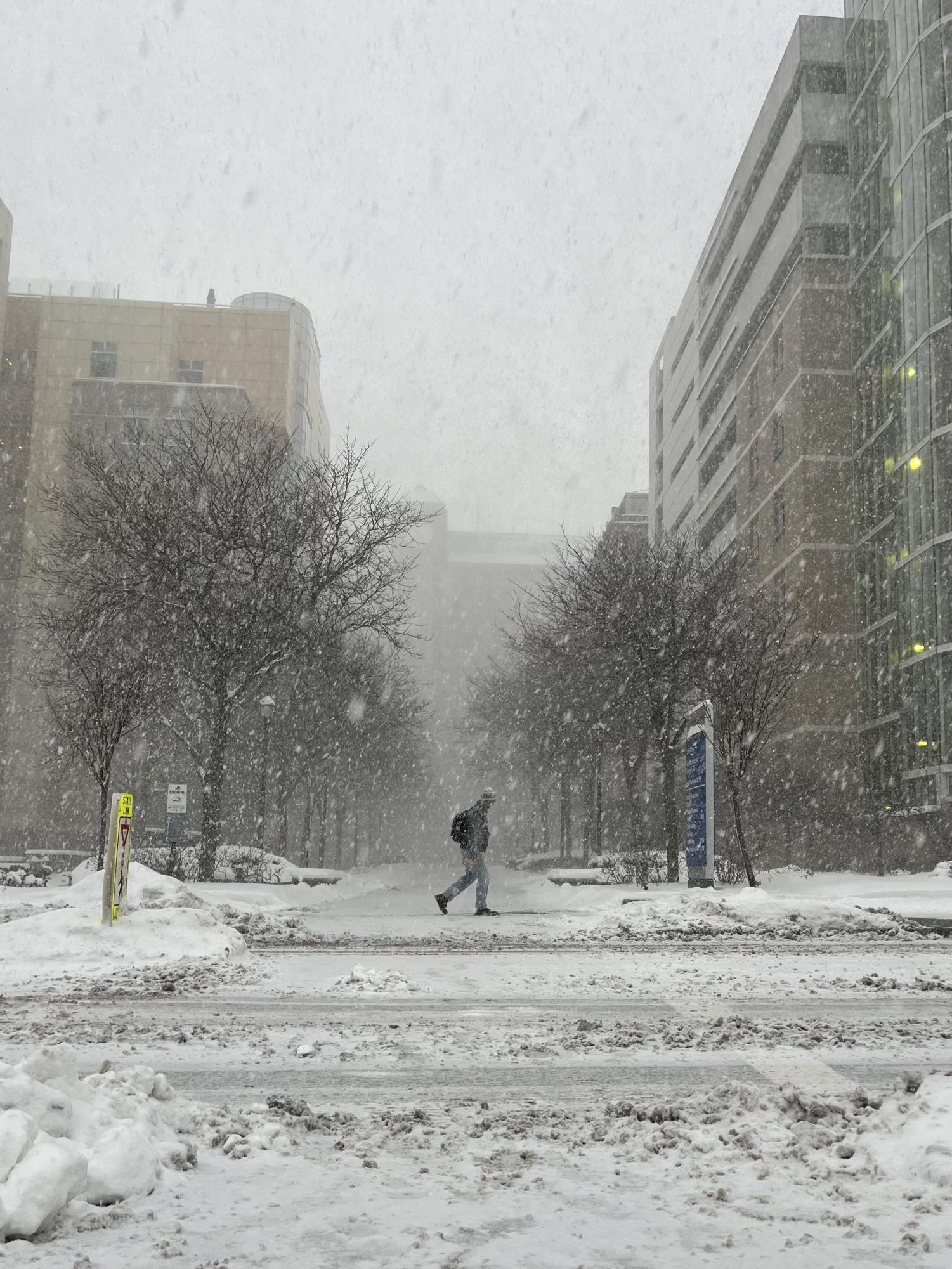
On Jan. 24, Case Western Reserve University students and faculty alike bundled up in preparation for a major winter storm forecasted to blanket the entirety of Northeast Ohio. The next day, Cleveland received more than a half-foot of snow, breaking a 47-year-old record for the day. By Jan. 26, Cleveland forecasts predicted additional snowfall and ice, along with single-digit temperatures and below-zero windchills.
Due to these anticipated weather conditions, CWRU issued an alert on Jan. 23 announcing that “given the National Weather Service Winter Storm Warning, Case Western Reserve will close at 5 p.m. on Saturday, Jan. 24, and stay closed through Sunday, Jan. 25.”
They then sent a follow-up the next day: “due to the significant snowfall expected Saturday night through Monday, CWRU will remain closed through the end of the day Monday, Jan. 26. All classes and activities on Monday are canceled, and all buildings (including the Dental Clinic, Tinkham Veale University Center, Thwing Center, campus fitness facilities, etc.) will be closed, with the exception of residence and dining halls, which remain open.”
Though the snow day announcement was met with excitement from many students, the CWRU community faced limited transportation as Safe Ride was unavailable and campus shuttles were delayed. The alert also warned that “individuals should avoid going outdoors and driving if at all possible, especially given the shortage of salt in the area.” The salt shortage made clearing the walkways more difficult, and the continuous storm slowed the process.
Despite the report of a salt shortage in the area, the university stated it was not worried about its own stock.
“The university has about 230 tons of salt—bulk, bagged and calcium chloride, all of which are used for snow and ice—with another 23 tons scheduled for delivery next week,” university administrators said. “The university isn’t concerned about the salt supply because of proactive planning for campus maintenance and management.”
Many student extracurricular activities were canceled due to the inclement weather. For instance, numerous sororities undergoing their primary recruitment phase transitioned to virtual platforms. First-year student Rhea Soni shared her experience with the change.
“It was nice to be able to stay in with how cold and snowy it was, but I was a little disappointed that the whole campus closed down,” Soni said. “I had rush events to go to on Sunday, but they were moved to Zoom, and then, rather than getting together on Monday for bid day, they sent out bids via email. I was still excited, but it wasn’t as fun.”
The week prior, on Jan. 15, CWRU had also posted an alert to delay classes until after 10 a.m. and implement early dismissal at 4 p.m. due to the extreme weather. The university continued to provide updates about the Cold Weather Advisory, stating it would monitor the conditions and modify class schedules, if necessary.
“I’m glad they canceled classes when they did,” first-year student Patrick Hwang said. “It was so cold outside, and I saw my friend slip multiple times in front of Tomlinson and around Fribley. It’s probably safer that we could just hang around the dorms.”
When determining whether to cancel or delay classes, the university’s committee, including leaders from the Office of the President, the Division of Student Affairs, the Department of Human Resources, the Division of Public Safety and the Department of Campus Planning and Facilities Management, makes the decisions. They gather data from Cleveland’s National Weather Service forecasts and the Cuyahoga County Office of Emergency Management. They also consider when and how quickly grounds staff can clear walkways and parking lots on campus, as well as the condition of roadways near and around campus.
“The safety of the CWRU community is our number one priority,” university administrators said. “Based on [the data], the university makes the best decision to ensure the safety of its community members while fulfilling its mission of providing exceptional education, conducting groundbreaking research and engaging with the broader Cleveland community.”