

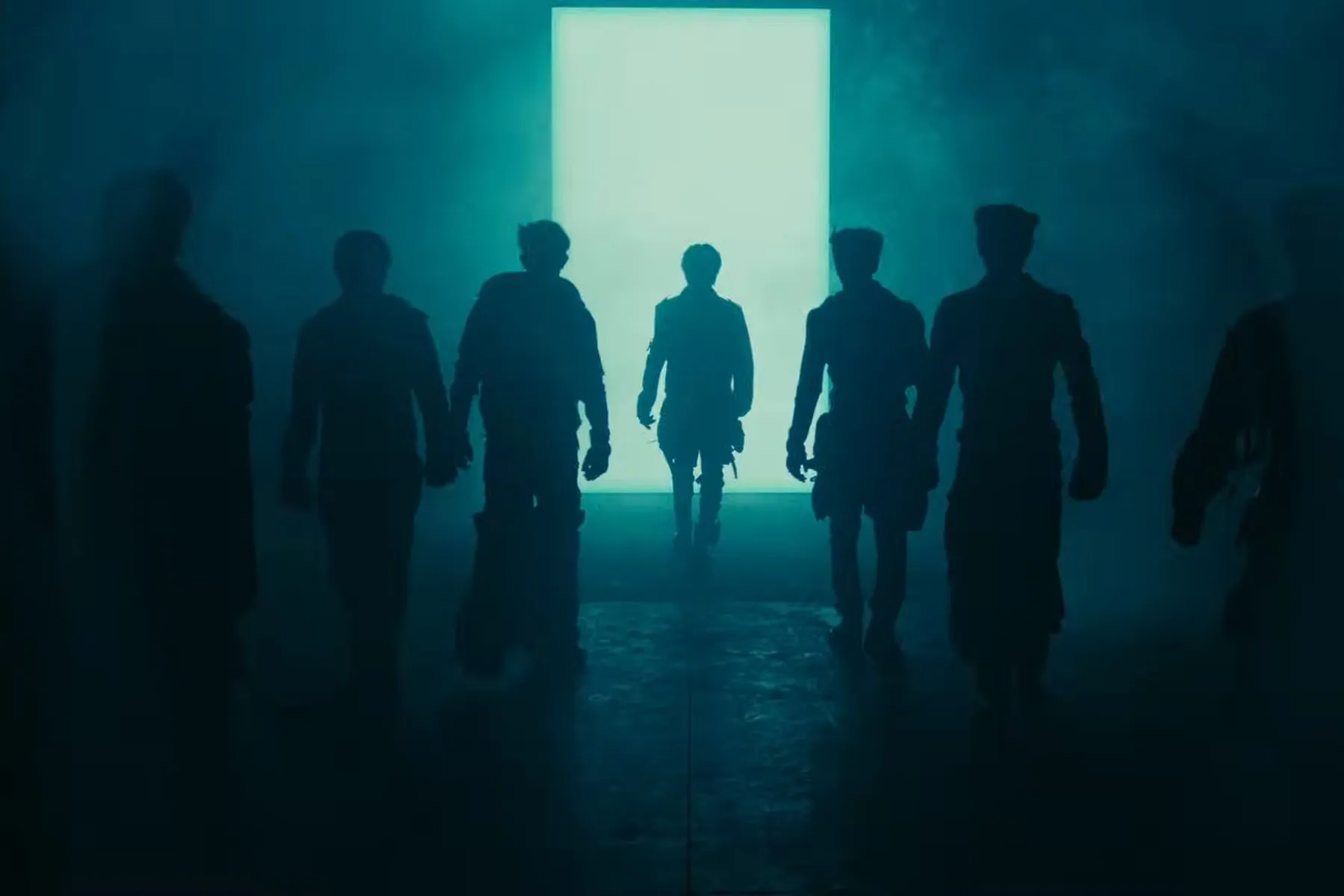
The members of fourth-generation K-pop group ENHYPEN have cloaked themselves in a Gothic opulence with their newest release, “THE SIN: VANISH.” Springing off of their previous album, “DESIRE: UNLEASH,” where they emphasized the concept of a dark, but touching, romanticism, the group channeled the aesthetic of vampiric lust that flirts with sin, transgression and the intoxicating allure of life beyond society’s taboos.
The second track, “No Way Back,” featuring So!YoON!, plays on the expressive duality between anguish and acceptance. The vampire lovers attempt to escape from the other disapproving vampires in this world, which is what begins the album’s storyline. Chaos bursts from what seems like serene retrospection, and tragedy is embraced in the form of resolve, not defeat, with the rhythm building up to a cathartic release, overflowing with rebellion.
While listeners might expect a consistent, vocal-centered album focused on continuous abandonment and escape, “Knife” takes a sharp turn towards confrontation. “On the edge of a deadly razor-sharp blade … We’re dancing like we’re in a movie.” Driven by cinematic bravado, the song casts the male vampire as both a lover and a protector, where he weaponizes acts of intimacy as a means to challenge societal constraint. The track “Stealer” is the natural escalation of this concept, strengthening the tone that was already dripping with unapologetic domination. It embraces fraught power dynamics: he is an assertive force who extracts power from everyone around him, even as his lover’s wavering loyalty lingers beneath the surface.
The album’s thematic momentum shifts towards tenderness in “Big Girls Don’t Cry,” with its beat anchored by heavy kick drums and punctuated rap delivery that draws influence from Black artistry. While the lyrics are framed as gentle, they carry an undercurrent of control. There are repeated reassurances of safety that are paired with commands to remain unquestioning (“don’t ask, where are we”), introducing a subtle tension between comfort and confinement. The lyrics, despite being slightly cringeworthy, are not meant to highlight female submission. “Big dog don’t bite” conflicts with the male narrator’s domineering veneer; it is an allusion to the saying “all bark, no bite.”
Up to this point, the album has focused on a darker aesthetic. “Lost Island” is an exception, offering a refreshing tonal shift from the more intense and “hellish” tracks that precede it. It blends rap interludes with the smooth, melodic lines of members Heeseung and Sunoo. Both lovers yearn for connection and peace amidst the chaos, and they escape their oppressive society through some sort of private, Garden of Eden-like paradise.
The penultimate track, “Sleep Tight,” unveils a profound layer of male vulnerability, in addition to contrasting the previous displays of unyielding strength. The narrator’s facade gives way to a self-acknowledgement of his own susceptibility, where he recognizes the overwhelming resilience and composure of his partner. With “[t]he curtain of guilt hanging over [him],” themes of protectiveness and heartfelt care transcend possessiveness. The calmer, dream-esque melody, coupled with intimate lyricism, crafts a poignant track characterized by raw, emotional candor. In the end, the listeners are meant to understand the complexities of this vampire couple, despite the emphasis on Gothic sin and desire.
As a K-pop album, I believe that it consistently sticks to a cohesive theme that focuses on the classic troupe of intertwined, doomed lovers. However, the concept of male vampires draining the vitality of their female counterparts, as well as serving as a metaphor for predatory desire, is overused—we see it in “Twilight” and Stoker’s “Dracula.” What makes up for this cliche is the twist at the end with “Lost Island” and “Sleep Tight,” where the singers acknowledge that there is equality between the male and female vampire. The songs themselves aren’t too memorable and groundbreaking, but the rhythmic build up established in “No Way Back,” combined with the harmonization from So!YoON!, introduces a compelling layer of tragic depth that elevates the overall experience.