


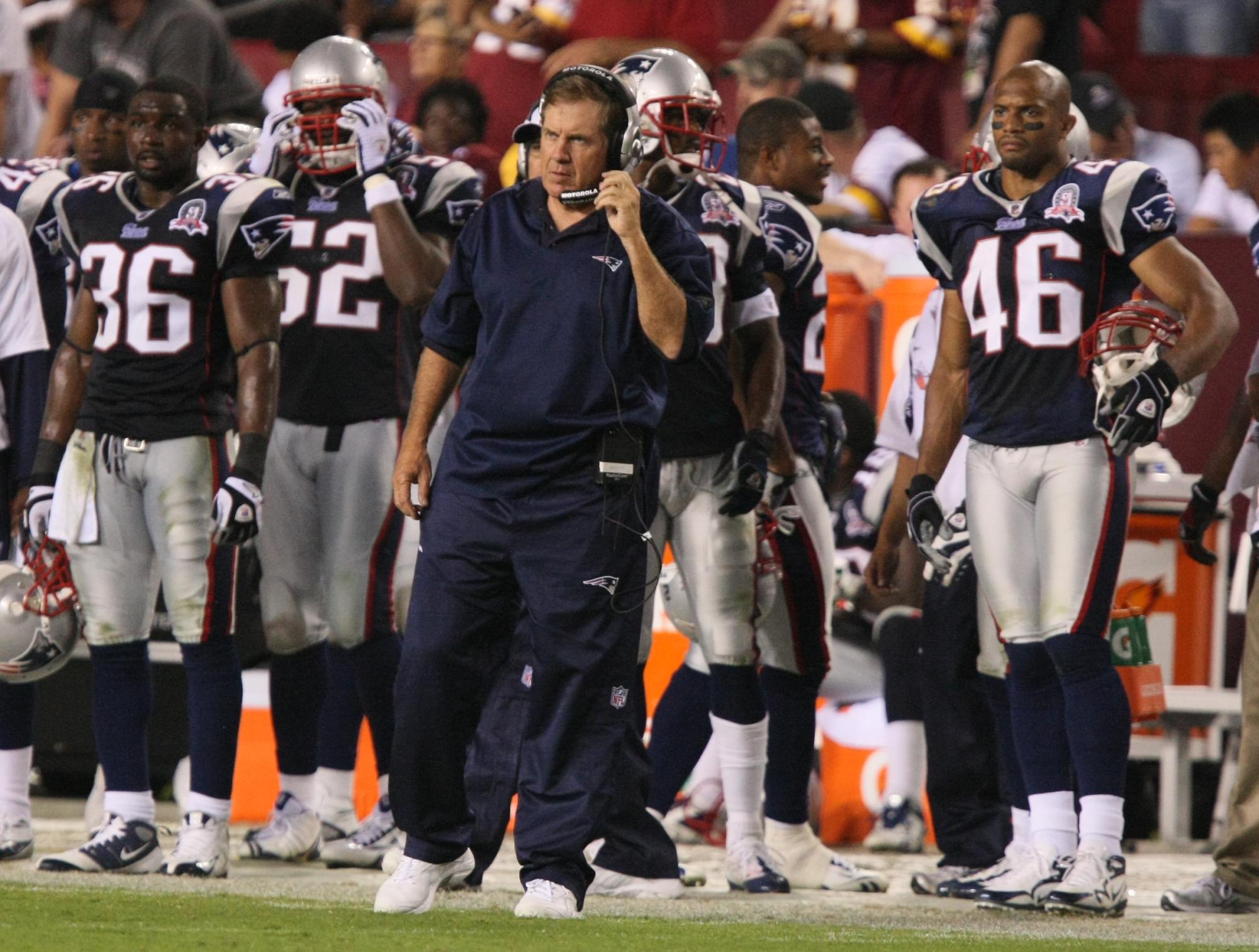
In a move that many in the sports world were caught off guard by, football coach Bill Belichick was not voted into the Pro Football Hall of Fame in his first year of eligibility. Belichick is most known for his tenure as the head coach of the National Football League’s (NFL) New England Patriots, leading the team, in conjunction with star quarterback Tom Brady, to six Super Bowl wins over the course of two decades. Prior to that, he won two Super Bowls with the New York Jets as the team’s defensive coordinator.
For some context on the voting process, nominations for induction into the Hall of Fame can be made by anyone—but these are merely nominations, not votes. From there, the Hall’s 50-member selection committee narrows the list of submitted nominations to 25 semifinalists and then 15 finalists through preliminary votes. Then, at the committee’s annual meeting before the Super Bowl, finalists are discussed, and the list is further cut to 10, then to seven, before the selectors cast their final ballots. For this last round of ballots, voters rank their top three of the remaining finalists, and based on the final vote tally, five of the remaining nominees are inducted into the Hall of Fame.
As for my thoughts on Belichick’s snub? Well, the facts don’t lie. For someone with as many accolades to his name, for him to not get into the Hall of Fame in his first year of eligibility is nothing short of a shocker and an absolute misstep on the part of the selection committee. How is someone like Belichick—a man who effectively co-ruled the NFL for the better part of the last two decades—not a shoe-in for what is meant to be a shrine to the best-performing, most talented individuals in pro football?
Now, in some fairness to the voters, Belichick’s tenure with the Patriots is not without its blemishes. Two notable scandals come to mind in this regard. The first, “Spygate,” involved the discovery that members of the Patriots coaching staff were videotaping the signals of their division rivals, the Jets, from undesignated areas: an attempt to better understand the Jets’ strategies to one-up them in future games, and a move that was found to be in violation of NFL rules. In the aftermath of this discovery, Belichick was fined $500,000, while the Patriots were fined $250,000 and forced to forfeit a first-round pick in the 2008 NFL draft.
The second scandal, “Deflategate,” involved the allegation that the footballs used in the Patriots’ victory against the Indianapolis Colts in the 2014 AFC Championship Game were intentionally deflated under the orders of Tom Brady. In the aftermath of “Deflategate,” Brady was suspended for the first four games of the 2016 season while the Patriots were fined $1 million and forced to forfeit two selections in the 2016 draft.
Even then, I don’t think these scandals are big enough dents on Belichick’s record to deny him a Hall of Fame spot. The fine for “Spygate” may have been relatively inconsequential for Belichick, given the millions he had already made by that point coaching the Patriots, but he nonetheless accepted his punishment and moved on. Nevermind the fact that the scandal was nearly 20 years ago now. As for “Deflategate”? Belichick didn’t have a direct role in that scandal; Brady was the central figure. Also, the Patriots won that game 45-7 over the Colts. Intentionally deflated footballs were far from the biggest reason why the Patriots won that game.
On the topic of the Colts, I think attention also needs to be drawn towards the Hall of Fame voters in question. One of them was Bill Polian, a longtime Colts executive who allegedly told fellow voters that he thought Belichick should “wait a year” before induction because of the aforementioned scandals. Though the Hall of Fame confirmed that Polian voted to induct Belichick, the point still stands that the voting process is not immune to conflicts of interest from voters. Changes could and should be implemented by the Hall of Fame to prevent such conflicts from happening. Some meaningful changes that could be made include making votes public to increase transparency, increasing the number of voters (what do you mean only 50 people are responsible for making decisions like this?) and reforming the final ballot to allow voters to rank five finalists rather than three.
Ultimately, the main purpose of the Pro Football Hall of Fame is to preserve the legacy of the greatest contributors to professional football. Not everyone in the NFL who is worthy of a spot in the Hall of Fame has a truly spotless record, of course, but the circumstances of such blemishes should still be considered in the overall context of their career. “Spygate” and “Deflategate” may have damaged Belichick and the Patriots’ brand and credibility at the time, but the general public has largely moved on from both of those scandals. Will the public move on from this snub as well? I’d say eventually, especially since Belichick will likely be inducted next year. But with all that said, if the Hall of Fame is truly meant to honor the best of the best, its process of inducting the best needs to change so that all can be ensured that their greatness—especially those of Belichick’s magnitude—are recognized without hesitation. Let us hope that such changes are implemented and that such blunders never happen again anytime soon.