

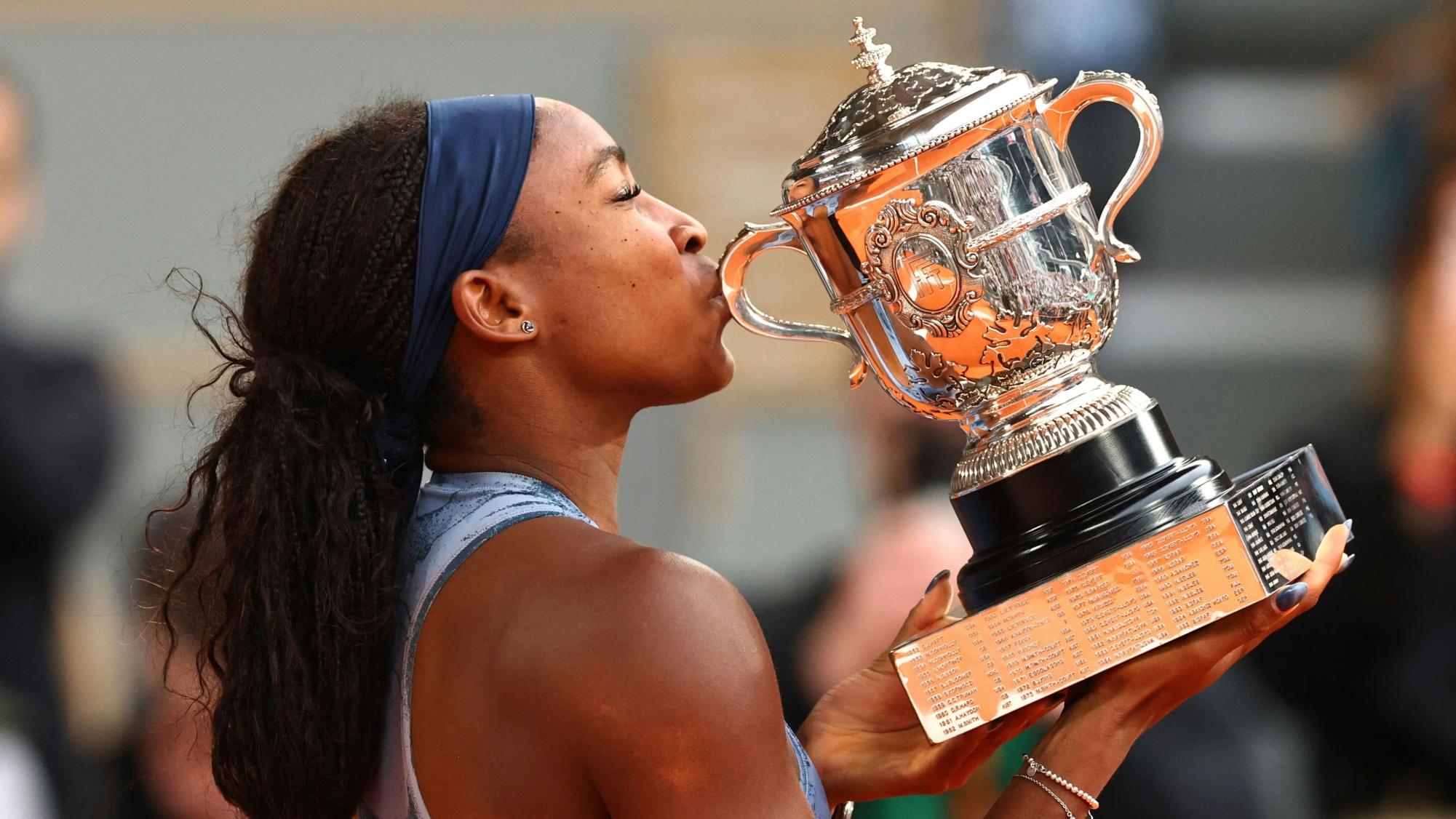
In the modern sports age, the rankings for the highest-earning female athletes are dominated by tennis players. In 2025, 21-year-old Coco Gauff, 27-year-old Aryna Sabalenka and 24-year-old Iga Swiatek were the three top-paid female athletes in the world. Unsurprisingly, all three are also top-ranking Women’s Tennis Association (WTA) singles players, and each took home a Grand Slam title last year. Tennis continues to dominate the Forbes’s top-earning list, with athletes from the sport also occupying the fifth, sixth, eighth, ninth and tenth place spots on the list.
Coco Gauff, who first rose to fame with her 2019 win against Venus Williams at age 15 and went on to win her first Grand Slam title at the 2023 U.S. Open, earned roughly $33 million last year, $8 million of which came from prize money. Trailing closely behind, No. 1-ranked Aryna Sabalenka made $30 million, with half of that from prize earnings. Meanwhile, six-time Grand Slam winner Iga Swiatek earned $25.1 million in 2025, with $10.1 million of that from on-court earnings.
Women in other sports earn far less in competition. For example, No. 4 on the list, Eileen Gu, an Olympic gold-medalist skier who competes for China, earned only $100,000 skiing, with the remainder of her roughly $23 million in earnings coming from endorsements and brand deals. Similarly, No. 11, Indiana Fever player Caitlin Clark, earned $100,000 from basketball, and the other $12 million were made from endorsements.
This dramatic comparison of on-field earnings is due to the equal amount of prize money offered at all Grand Slams and ATP/WTA 1000-level events. Spearheaded by Billie Jean King, the US Open became the first Grand Slam to provide equal prize money for both genders beginning in 1973—a standard that all Grand Slams honor today. At the currently ongoing Australian Open, both the female and male singles champions will bring home a $4.15 million AUD prize at the end of the month (roughly $2.7 million USD), and at the US Open last summer, the prize for each champ was a whopping $5 million USD.
To put just how unique this rule is into perspective, the winning team of the 2023 Women’s World Cup earned roughly $10.5 million from FIFA, while the champion of the upcoming 2026 Men’s World Cup is set to take home $50 million. Same tournament, same rules, same trophy … different payout. The usual argument is that the men’s tournament is more popular, yet tennis faces similar popularity disparities and has successfully implemented equal pay. If tennis can do it, why can’t the rest of the sports world?
Some might argue that tennis is more individualistic, that champions are fighting for their own titles and time on the court, making high earnings a no-brainer. But plenty of other individual sports also have this “champion mentality.” Take Eileen Gu, for example: Outside of Winter Olympic years, she skis for herself and her own titles, yet her prize earnings are nowhere near as high. In 2026 alone, Gauff has already made $554,000 from the United Cup, quintuple Gu’s prize earnings in 2025, and it’s only January.
Tennis has shown that equal pay for female athletes is possible when talent and opportunity are valued equally. Other sports continue to lag, but the success of tennis leaves little room for excuses. Until more leagues follow suit, female athletes will continue to face a significant gap between their efforts and their earnings, a disparity that profoundly impacts their lives.