


On Feb. 3, the United States House of Representatives passed the Consolidated Appropriations Act, 2026, which contains five funding bills for the 2026 fiscal year. Funding recipients included the Department of Defense (DoD), the Health and Human Services (HHS), the Department of Housing and Urban Development, the Department of Transportation and more. The federal funding bill for the Department of Homeland Security, which has become a highly contentious topic due to increased Immigration and Customs Enforcement (ICE) activity, was notably missing from the approved Appropriations Act.
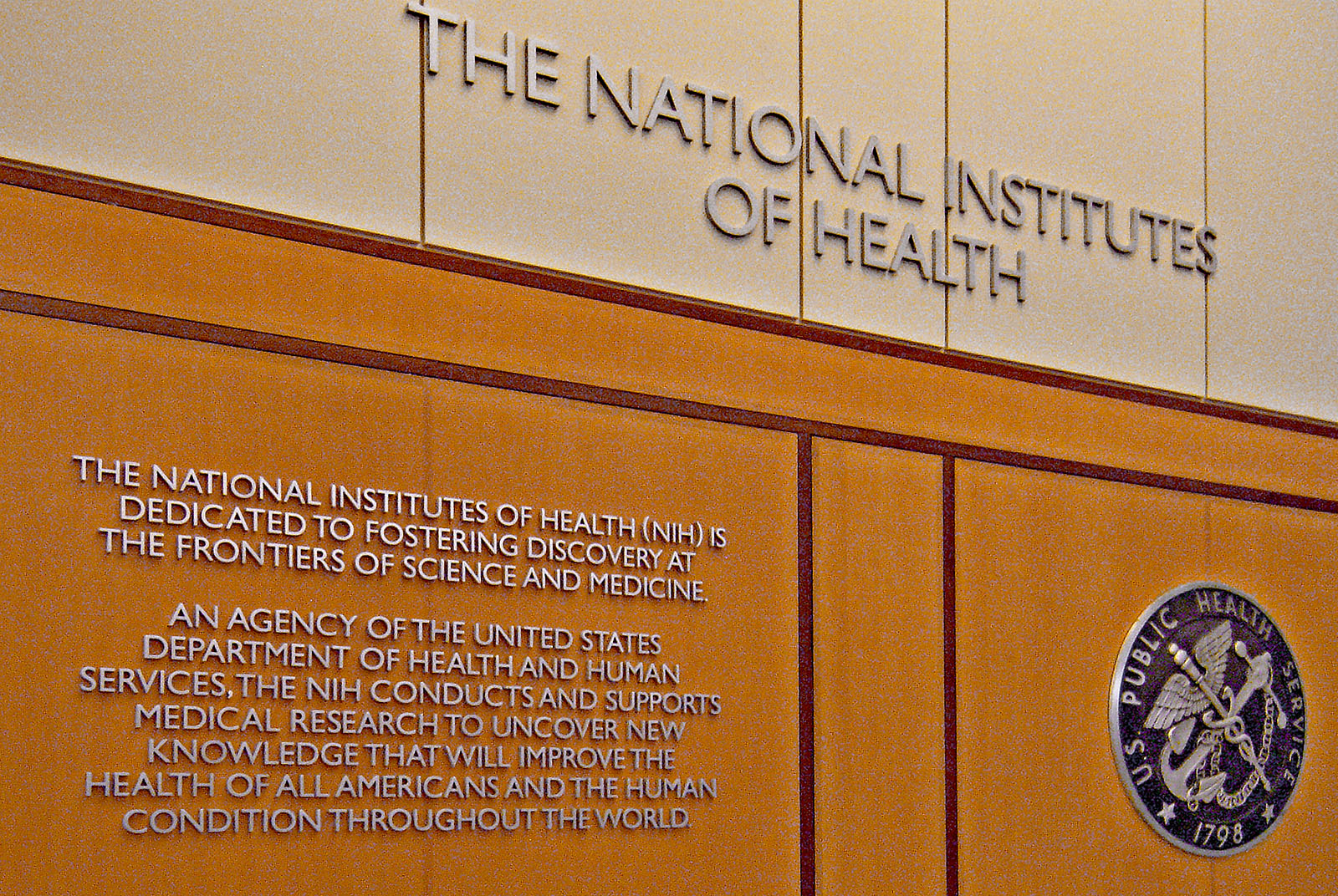
One of the act’s most notable outcomes was Congress rejecting President Donald Trump’s 40% cut to the National Institutes of Health (NIH). Initially released on May 2, 2025, Trump’s Discretionary Budget Request proposed cutting total federal research funding by 20.5%, with a proposed 40.5% cut to the National Institutes of Health (NIH), a 56.9% cut to the National Science Foundation (NSF) and a 24.3% cut to the National Aeronautics and Space Administration (NASA). The $17,965 million decrease was justified according to the Trump administration, which stated that the “NIH has broken the trust of the American people with wasteful spending, misleading information, risky research, and the promotion of dangerous ideologies that undermine public health.”
The presidential administration extended these sentiments to the grant approval process as well.
On Aug. 7, 2025, Trump signed an executive order titled “Improving Oversight of Federal Grantmaking” meant to make sure that “every tax dollar the Government spends should improve American lives or advance American interests.” This executive order required federal agencies to designate political appointees who would oversee the approval or rejection of grants to “ensure that they are consistent with agency priorities and the national interest.”
Additionally, a leaked list of flagged words from NSF circulated among scientific communities last year. Terms such as “diversity,” “marginalize” and “gender” were said to violate the president’s executive order “Ending Radical And Wasteful Government DEI Programs And Preferencing,” allegedly triggering increased review or immediate disqualification of grants.
In 2025, eight Case Western Reserve University NIH grants were terminated, totaling $3,011,219.25 in “unliquidated obligations.” All eight of the grants were terminated under “Departmental Authority” with grants ranging from research on “Long-Term Effects of COVID-19-induced Health Care Delivery Changes on Patient & Workforce Processes & Outcomes in Safety Net Practices Caring for Health Disparity Populations” to “Dual action immunostimulatory nanoparticles for treatment of aggressive cancers” and “Estrogen-mediated immune regulation in human and experimental inflammatory bowel disease.”
These actions by the federal government have changed the research landscape.
The NIH has historically been “the largest federal funder of research at U.S. institutions of higher education.” And at a university where medical research makes up a large portion of its research endeavors and reputation, NIH grant funding plays a significant role at CWRU.
“Case Western Reserve University faculty compete and receive significant research grant funding from federal agencies. Some of the funding supports graduate students who work with our faculty to advance scientific discovery and innovation. Universities in the United States have had a decades-long partnership with the federal government that has secured the nation’s position as an international leader in scientific research and innovation,” the university said in a statement to The Observer.
Beyond the additional review of grants, the presidential administration implemented a new policy where multi-year grants will now be awarded as an upfront payment rather than annually. When the policy was announced, a Science Magazine article predicted a sharp decrease in the number of awards.
That hypothesis was correct. A December 2025 report from Congress revealed that 5548 fewer grants were awarded in 2025 than the 2020-2024 average of 56392.
According to NIH’s RePORT, as of February 2026, CWRU has been awarded $18,385,205 between 38 research proposal grants (RPGs) for the 2026 Fiscal Year. During the 2025 Fiscal Year, $141,796,566 was awarded across 238 research grants, and $151,461,634 in 2024 across 276.
Post-undergraduate education is also feeling the impact of reduced grant awards. PhD admissions in the past year and a half have been unpredictable for many, with cases of acceptances to institutions being withdrawn due to a lack of funding last year. Some PhD programs are direct admit which means students are admitted into a specific lab where their principal investigator (PI) is responsible for funding a student’s tuition and stipend through their research grants.
Furthermore, a concern in funding post-undergraduate education has arisen following the “Big Beautiful Bill.” Effective July 1, graduate and professional degree loans will have lower caps, with lifetime amounts of $100,000 for graduate degrees and $200,000 for professional degrees. Degrees previously considered professional—such as nursing, social work and education—have also been reclassified as non-professional degrees by the Trump administration, impacting their lending amounts.
Additionally, a list of universities that the Department of Defense was considering revoking tuition assistance for was circulated online. Included among many top private universities—such as Harvard, Yale and Princeton—was CWRU.
“Civilian schools are an important part of the military ecosystem. We are seeking further clarification from the administration,” the university said in a statement to The Observer.
With these changes, questions regarding access to higher education have surfaced. Tuition costs have only increased in the past few years, and these new changes with loans and federal funding have the potential to impact students’ career options. As a student, it is important to be aware of such policies and how they can impact your future career and life.