

The Women’s National Basketball Association (WNBA) is in the midst of a historic battle as players push for a compensation structure that reflects the league’s rapid growth and cultural impact.
Over recent seasons, the league has seen historic increases in viewership and attendance, yet many athletes feel their pay lags far behind the value they help create. In the 2024 season alone, total WNBA viewership reached a record 54 million across broadcast platforms and attendance nearly doubled compared to the prior year. This surge in attention has positioned the league as one of the fastest growing professional sports organizations in the nation.
Despite this momentum, the league’s compensation framework remains modest by professional sports standards. As of the 2025 season, the average WNBA base salary was about $102,000, with top salary earners capped roughly at $249,000. Contrastingly, NBA players earn an average salary exceeding $11 million, with minimum salaries surpassing $1 million. Much of this disparity stems from revenue sharing. While NBA players receive approximately 49-51% of basketball-related income, WNBA players currently receive an estimated 9-10% of league revenue, which economists and analysts have described as unusually low, even for a developing league.
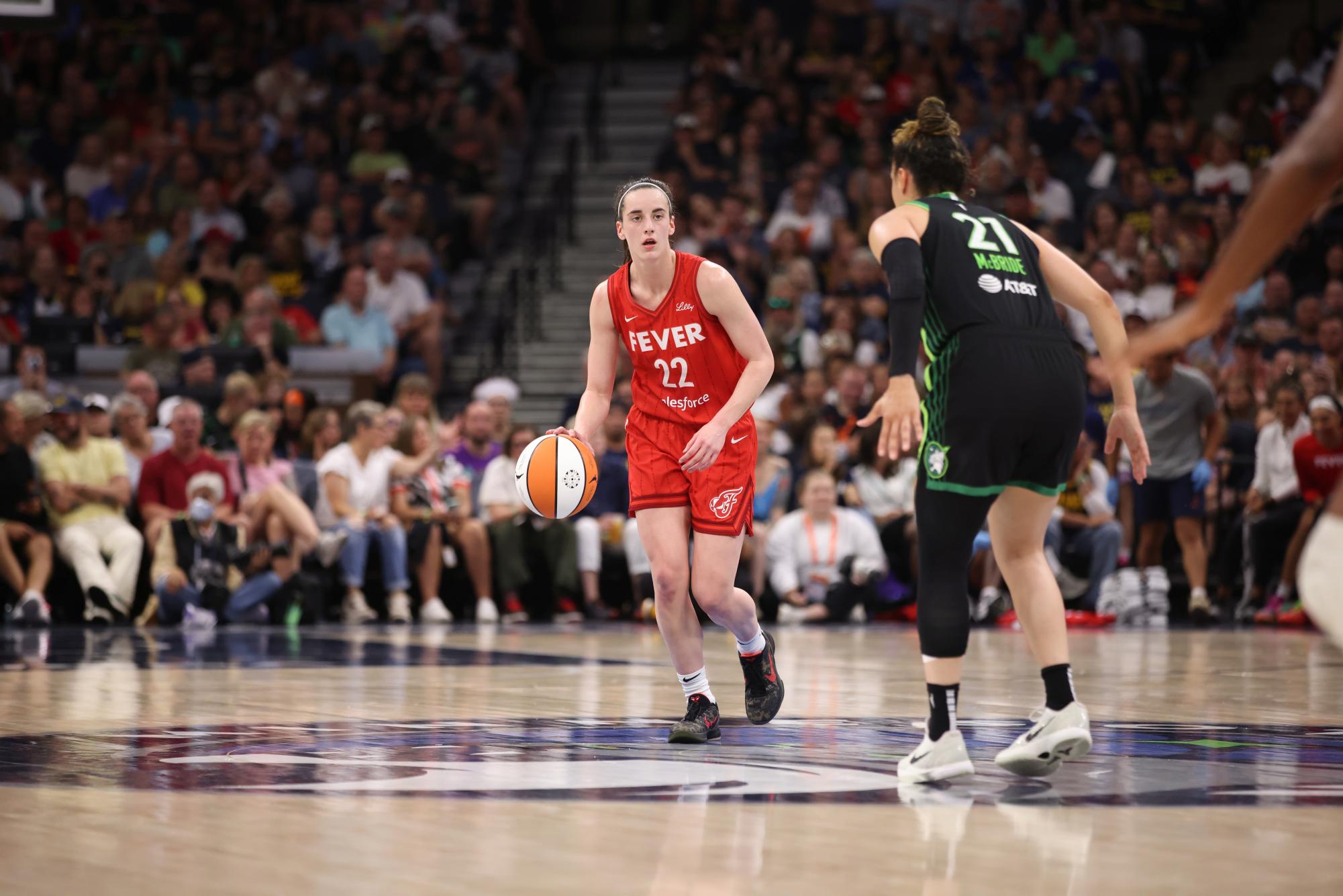
The economic gap has become more visible as new stars elevate the league’s profile. One of the most marketable athletes in women’s sports, Indiana Fever’s Caitlin Clark, helped drive television ratings, ticket demand and national media attention following her arrival to the WNBA. Her impact has underscored the league’s commercial potential, but players argue that the current salary structure prevents them from sharing meaningfully in that growth.
Frustration over these conditions became highly public during the 2025 WNBA All-Star Game, when players wore black warm-up shirts reading “Pay Us What You Owe Us.” The coordinated action, led by players, including Minnesota Lynx star Napheesa Collier, served as a direct response to ongoing collective bargaining agreement negotiations between the league and the Women’s National Basketball Players Association (WNBPA). The message resonated widely, prompting chants of “Pay them!” from fans and drawing national media attention. Players explained that the slogan was not a demand for charity or NBA-level salaries, but for a revenue-based system that allows compensation to rise alongside league success.
Retired WNBA players have also voiced strong support for the movement. Former players, such as Rebecca Lobo, have acknowledged that today’s athletes are advocating for changes that earlier generations lacked the leverage to demand. Many retirees have emphasized that the league’s current stars are building on decades of groundwork laid by past players who competed for far less pay and visibility. While some former players have advised careful messaging during negotiations, the prevailing sentiment among retirees is that the current push is both overdue and necessary to ensure the long-term health and legitimacy of women’s professional basketball.
At the same time, there is opposition to major pay increases. Critics argue that the WNBA has not yet achieved consistent profitability and continues to rely on NBA investment. From this perspective, they contend that raising salaries too aggressively could strain teams financially and jeopardize stability. These critics maintain that compensation should grow only after sustained revenue gains are firmly established, framing the issue as one of economic caution rather than gender equity or player worth.
The broader debate reflects a tension between present financial realities and future potential. While the WNBA recently secured a multibillion dollar long-term media rights deal and continues to expand to new cities, many players still supplement their income by competing overseas or participating in leagues such as Unrivaled—the 3v3 league founded by Collier and New York Liberty star Breanna Stewart—during the offseason in hopes of earning additional income.
As negotiations continue, WNBA athletes are advocating for a model that ties their earnings directly to the league’s success to ensure that growth benefits those on the court as much as those in executive offices. The outcome of these negotiations may not only redefine the WNBA’s economic structure, but also set a precedent for pay equity across professional athletics.