


There’s no shame in saying that if I were to rank how much time I spend engaging in fandom in comparison to more fruitful endeavors like sleep or budgeting for the upcoming recession, it would still be firmly placed in my top three activities. I was part of fandom culture before most websites would be happy to know I was. I’ve had the same Archive of Our Own account since before they had exclusionary filters and I had a truly cringe-worthy “Incorrect Quotes”-style Tumblr blog for a good part of my middle and high school years. Most of my post-pubescent life has been deeply enmeshed with fandom culture and spaces. This is all to say that it is not a complete outsider telling the fandom that it’s being completely stupid at best and downright malicious at worst when members cannibalize art without actually engaging with it in good faith and then attack its author when he says that he’s uncomfortable with this.
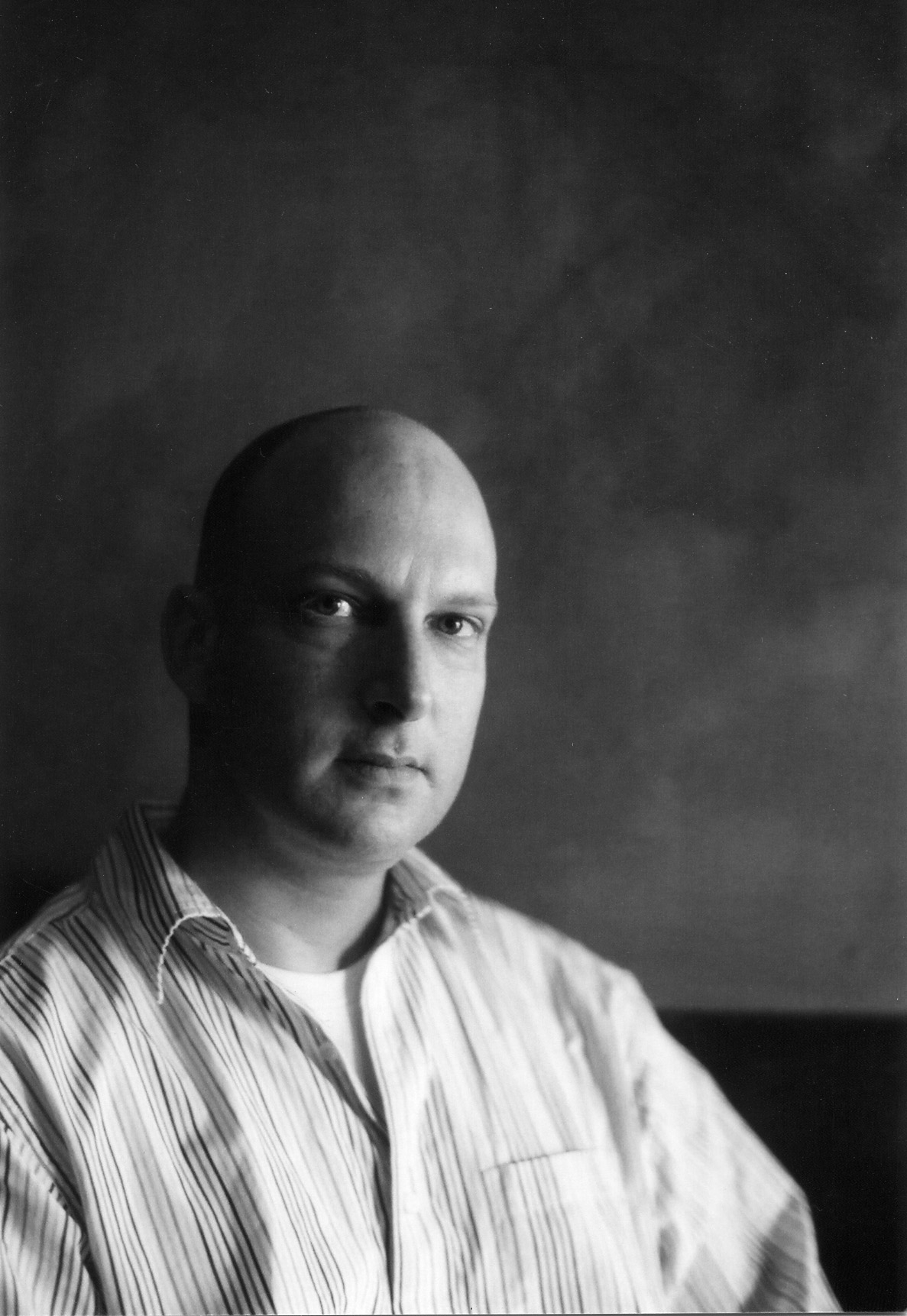
Richard Siken is a poet. A great one in my opinion. While I’ll admit that I have only read his first novel, “Crush,” I’ve found that his driving diction and ceaseless urgency was crushing (pardon my pun). I discovered him as a young, queer teenager who was first trying to make sense of her world. Siken did not make sense of my world—his world was that of a gay man who survived the AIDS epidemic with insurmountable loss, mine was mine to understand. But, at the very least, I could find a connection out there with his verse. I could find a sense of understanding and empathy even when the Richard Siken who wrote “Crush” and the Mariana who read it were so far apart in years, life stories and conclusions. If it came to it and someone asked me who are some of my favorite poets, Richard Siken’s name would most likely be pretty early during the 20-minute lecture you’ve just signed yourself up for. My predilection for Richard Siken is not rare considering my age and background. He is one of the most commonly known among my generation outside of the standard English high school curriculum circuit, though most of his prominence is unwanted.
When enmeshing yourself in fandom circles, it would not be uncommon to see fragmented excerpts of Richard Siken’s poetry used for any and all fan products especially when it is (relation)ship-based. Fan edits, photo compilations, fan fiction titles and tweets saying “[X ship] is so [insert quote here]” all feature excerpts of Siken’s work, though oftentimes without actually citing the excerpt’s source. It is also not uncommon to see that the people who use Siken’s poetry as a supplementary source of their fan works often do not read Siken himself. Rather, it is often other fan works that inspire the usage of the Siken quotes. The use of these Siken quotes then do not represent a commentary on Siken or on the themes that he explores in his poetry, but rather on its usage within fandom.
As you can guess, Siken is not thrilled about this phenomenon. He is now part of the endless tapestry of fandom as he himself has been vocally part of fandom for more than a decade through his Tumblr and Twitter accounts, showing himself to be enthusiastic about the usage of his poetry in transformative works of fandom.
Of course, this comes with a caveat: he wanted those who used his work to actually interact with his work and use it consciously within the context of his poetry. As he tweeted in 2023 following his return to social media after surviving a stroke in 2019, “I did not die 100 years ago and I did not die 4 years ago when I had my stroke. It’s okay to Google things, you don’t have to make them up. It’s also okay to quote an author, even use their lines, but you should know who they are and (hopefully) buy their books.” Succinctly put, Siken is fine if you use his work as long as you at least know about him. Unfortunately, a good number of people decidedly break this one and only rule.
On Nov. 11, Siken posted a screenshot of “Crush’s” 20th anniversary edition’s afterword, which states: “Some fans altered the male/male dynamic of the poems and posted their new, re-gendered versions. Some used the quotes in contexts that didn’t make sense to me. Some misquoted the poems on purpose to suit their needs. I wanted readers to find meaning in the poems, even if that meaning slid away from my intention, but sometimes the revisions slid too far away from the original text. I felt as though my inner life was being translated into something unrecognizable.”
The caption of the post read “Dear Buddie lovers, from the afterword in “Crush.”” Siken posted this tweet due to the backlash he received from publicly disliking a tweet comparing one of his poems, “You Are Jeff,” and the non-canonical ship between Buck and Eddie from a procedural melodrama called “9-1-1,” writing in his response that “Buddie is the least Richard Siken thing I have ever heard of […] It’s great when cool things overlap. Buddie and Siken don’t.” This ruffled the feathers of some Buddie fans, taking it as a direct insult of their ship even when all that Siken’s post was saying was that he simply did not see it that way, especially as Siken later referred to “Crush” as “An AIDS memoir.”
The response to this was rather brutal and misguided. Many referenced the concept of the “death of the author” as established by Roland Barthes, arguing that anyone in fandom had the right to take Siken’s writing and do with it whatever they wanted. For Siken to dislike this was, as they saw it, breaching upon this right. One memorable quote tweet to one of Siken’s responses read “no. the author needs to DIEEEEE [sic]” while a slew of insults of the age-related and relevancy-related variety could be found in his comments. Most of them had not actually comprehended the afterword excerpt that Siken had published, and those who were crying “death of the author” had obviously not comprehended that either. Lovingly stated, most of these people read like they were functionally illiterate.
This is the problem with fandom practice lately by way of extension of the growing culture of anti-intellectualism. As the practice of critical analysis within the humanities becomes undermined by government policy and sociocultural shifts, people lose touch with what makes up a well-thought out logical argument. They lose touch with how to read a text in its entirety without having a hot-take quote-tweet response at the ready and even what makes transformative works unique. Transformative works are a form of commentary and criticism, as the consumer of the work emphasises, diminishes, criticizes or even celebrates aspects of said work through off-shoots. They are a way to help the work be interpreted beyond what is presented on the screen or on the page. By nature, they are supplementary in the way that a literary analysis paper is supplementary. They do not stand alone.
Richard Siken is not the second coming of Anne Rice. He is not threatening legal action at whoever creates transformative works using his poetry. He is simply stating that before analyzing a text, one should maybe read it first, engage with it in good faith and then transform it into a new, critical iteration of itself. Richard Siken is allowed to feel some kind of way about people using “Crush,” which is largely inspired by the memories of his boyfriend who died of the AIDS epidemic in the 90s, in a context that he does not understand. It seems cruel to begrudge him the conversation between author and reader through the act of only reading three verse lines at a time and drawing your own conclusions from there. I’m not saying that he needs to give out his seal of approval; I’m just saying that he is allowed to have an opinion.