

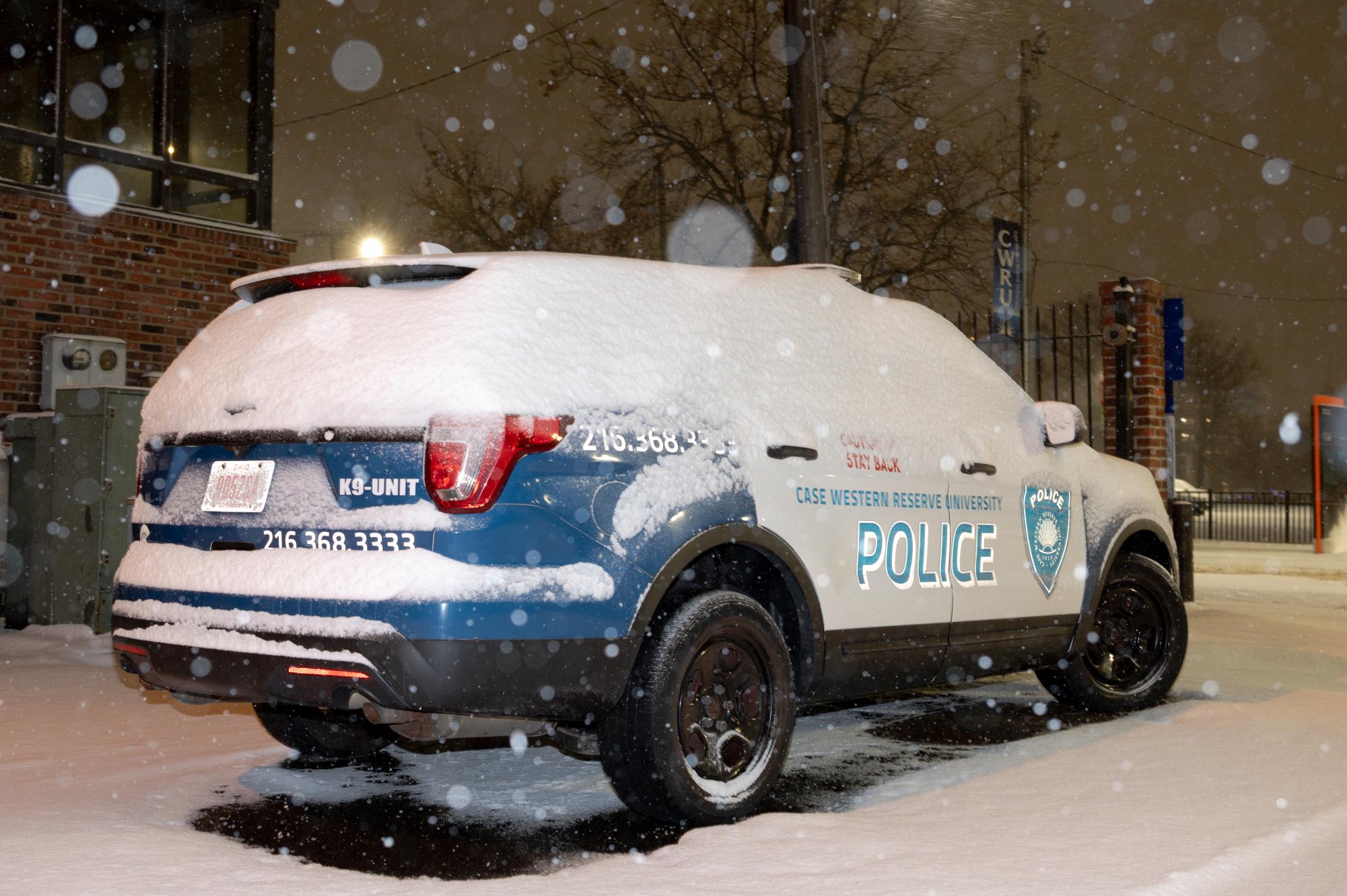
In the past week, we’ve experienced snow squalls and sub-zero wind chills, which have made it that much more difficult to scrounge up any lasting motivation to attend lectures. Wind gusts were predicted to reach up to 50 miles per hour, bringing the experience of Antarctica to our front doorsteps. The extreme wintery conditions can only be prevented by Mother Nature herself, but Case Western Reserve University could do a better job at preparing for them. “Severe weather alerts” were broadcasted on our weather apps, yet the school’s light recommendation to “use shuttles, Safe Ride and take precautions to protect yourself from the cold” seemed to suffice from the administrative perspective. What was excluded, though, were the actions that should have been taken to keep students inside as much as possible, safe from the risk of frostbite. Essentially, accommodations weren’t met and students were basically told to put on an extra layer or two.
The shuttle system isn’t a reliable one. If you’re lucky, the Greenlink (the most popular route taken by CWRU students) may provide two shuttles en route to transport students to main locations on campus. You’ll likely have to wait for the one shuttle that is available, and, even so, you are not guaranteed a seat. The shuttles are at high demand during critical periods of the day in the wintertime as is, so informing students to utilize the shuttles is a complete non-solution to the situation. It would have been admirable of CWRU to organize additional “winter shuttles,” giving more students the opportunity to take advantage of the shuttles at reasonable times of the day. Often, the shuttles do not consistently arrive at convenient times. Instead, if you wish to have any chance of making it to class on time, taking the shuttle at least half an hour before lecture is your best option.
Safe Ride is only available after 6 p.m., so its use is limited in opportunity. At this time of year, the sun sets around 5:30 p.m. so the significant drop in temperature can be felt earlier in the day. Most students are still in lecture, attending extracurricular activities and finding their way back to the dorms. It is likely that we will find ourselves or others outside at this hour. If CWRU were to create actual solutions for the bad weather, extending the Safe Ride hours would be a good start, too.
In the event of the snow squalls that rolled in last Monday, in-person classes remained in session for the most part, and it was up to the professors to make the decision of holding online classes or cancelling lectures altogether. This creates inconsistencies among the staff of CWRU, which should act as one united front in the face of danger, no matter the degree. However, the inconsistency may be attributed to CWRU’s lack of coordination between staff members. This is why declaring online classes in extreme weather events may be a wise decision to eliminate the possibility of biases and opinions acting to influence professors’ decisions in whether or not to hold in-person lectures.
It seems that committing to the decision of online or canceled classes attaches a stigma—if students are given the opportunity to jump into a Zoom meeting from the comfort of their own bed, then they are less likely to pay attention, wasting critical lecture time. However, our health comes first. As students in a highly academic environment, it is harder to put our needs and health first when the school’s actions, or lack thereof, send an opposing message. In spite of the weather, we have been told to deal with the cards we have been dealt. At the end of the day, we are all here to pursue an educational degree, and it should not strip us of our safety.