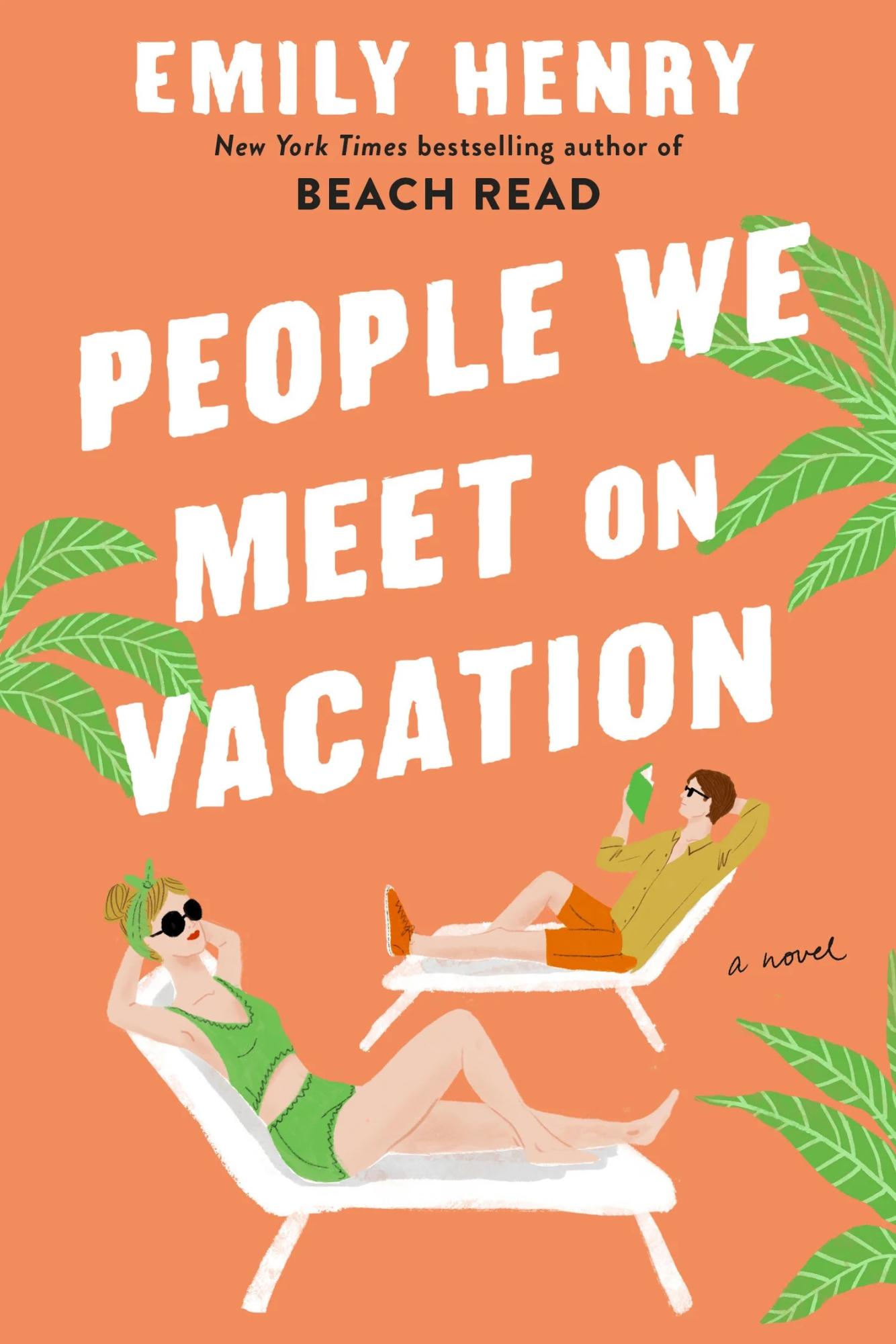

Major Spoilers for “People We Meet on Vacation.”
“People We Meet on Vacation” is a simple meal well made: a classic rom-com. We follow Poppy, an energetic travel enthusiast, and Alex, her uptight, history nerd best friend from college. After a rocky road trip home from their first year of college, they become fast friends and resolve to take a vacation together every year. As time goes on and the pair progress further into their careers as travel writers and overly-qualified high school teachers, these trips become more extravagant and complicated. Through it all, they always have vacation—that is, until one fateful night two years ago, when something went horribly wrong. In the present, Poppy has just been invited to Alex’s brother’s destination wedding. As one last attempt to rekindle their dying friendship, Poppy offers Alex a vacation together in anticipation of the wedding. Through flashbacks and present day miscommunications, the reader watches Poppy and Alex face their fears, come out of their shells and fall for each other.
The 2026 film adaptation is the first of popular romantic comedy author Emily Henry’s books to be adapted. Since it was first announced, there has been a lot of buzz around the film. Yulin Kuang, another romance author, was brought on to screenwrite, the actress for Poppy (Emily Bader) had just come off the wildly popular fantasy show, “My Lady Jane” and fans of Alex’s actor (Tom Blyth) were eager to see him play a hero after his stint as Coriolanus Snow in “The Ballad of Songbirds and Snakes.” While some took issue with this choice as the first of Henry’s books to be adapted, with “People We Meet on Vacation” (2021) being her most consistently disliked book, I am not among them. “People We Meet on Vacation” is one of my favorite Emily Henry books, which is why I can confidently say that though the 2026 film is a fun time, it is only loosely based on the 2021 book.
The “People We Meet on Vacation” movie was never going to be perfect. This is an obvious side effect of adapting a 400 page book to a roughly two hour movie; things are going to get cut. As such, while the book marries present day Alex and Poppy shenanigans with sweet flashbacks to all ten vacations, the movie simply does not have the space to do so. It makes sense that the trip to Nashville, which does not push the plot forward as strongly as their first camping trip, was on the chopping block. Even their pre-wedding vacation is completely cut in favor of fleshing out the few vacations that made the cut.
In the book, each of these trips is explained fully and completely. Losing that time does not cut into the romantic aspect of the film as much as it does the friendship. One of the most charming parts of the book is the slow fall between Poppy and Alex. In those early trips, the reader really does get the sense that they are just friends. While they are the most important person in each other’s lives, there is a barrier. It’s endearing and, crucially, makes Alex and Poppy’s other partners feel more realistic. With a limited runtime, the movie just cannot capture the evolution of the couple’s love from deeply platonic to all-consumingly romantic. The movie falls short, literally.
The most glaring omission is Croatia. The Tuscany, Italy trip shown in the movie is actually a combination of two trips from the book: Croatia and Tuscany. In Tuscany, three summers ago, Poppy and Alex bring their respective partners, Poppy has her pregnancy scare and the pair realizes that their trips are sacred and just for them. In Croatia, two summers ago, Poppy and Alex were both single, got drunk and made-out. In the fallout, Alex ghosts Poppy, and we pick up in the present. In the movie, Alex and Poppy are on the verge of cheating immediately after Poppy’s pregnancy scare, when Alex backs off and proposes to his girlfriend, Sarah (Sarah Catherine Hook). Then the fallout plays out the same. Merging these two trips overloads the emotional impact; it is too much.
The “Croatia Incident” haunts the narrative so effectively because it is just the couple; there is a sweet intimacy in being forced to reconcile what they are to each other. The movie distracts from this climax with Alex and Poppy’s partners. Alex and Poppy aren’t just a couple, they are cheaters. The audience is caught between feeling happy for the couple and empathizing with Sarah; that could kill the mood of the film.
The saving grace for Sarah is another minor change to the resolution to the film. In the film, Poppy catches Sarah at the airport as a flight attendant, not as a high school teacher back home. This shows stronger theming with Sarah representing Alex being stuck in the past, back in Ohio. Her not being a teacher also gives her a little more agency outside of Alex and makes it less like she’s trapping him with her as opposed to trapping him in Ohio. Poppy makes peace with her past and is forced to reconcile with material harm she did to Sarah while she was floating through life. It allows Sarah to move on apart from Alex. This changes what the peace-making between Poppy and Sarah means, but it humanizes Sarah in a way this movie desperately needs.
Still, I do have one more serious problem; this summer’s change from Palm Springs to Spain. In the book, Poppy makes a desperate attempt to reach out to Alex for a trip, but he declines because he has his brother’s wedding that weekend and Poppy pitches a vacation leading up to the wedding, under the guise that her job will fund it. Since this is the off-season for Palm Springs, Poppy must fund the barebones vacation herself. This marks a return to the travel Poppy did for her blog when it was just her and Alex, and when things start to go wrong, the chaos validates Alex’s fears that Poppy doesn’t take anything seriously. Changing the trip to Spain is certainly more beautiful, but it does not give the couple the closure they need. Before Poppy can learn to be with Alex, she needs to ground herself and fall back in love with travel. Alex, of course, needs to let loose and chase his dreams outside of Ohio. Cutting the harsher elements removes the work the couple did to be together. There is a reason that Alex and Poppy wouldn’t have worked in college, but do now; they are different people. “People We Meet on Vacation” (2026) is not a character story; it is just a rom-com, a really good one.
While “People We Meet on Vacation” is by no means a perfect adaptation, it is worth a watch as its own entity. It is colorful, both in terms of physical composition and soundtrack. Alex is a loveable, slightly-uptight nerd, and Poppy is a charming ball of energy that could hold her own against any Meg Ryan heroine. If rom-coms were taken more seriously, I would say Bader should be hearing Oscar buzz. This is all to say that the ideal way to consume “People We Meet on Vacation” is to read the book two years before watching the movie, have a vague recollection of plot beats and affection for the characters, and then fall in love with Alex and Poppy all over again on screen.
Categories:
‘People We Meet on Vacation’ takes a trip from the book

January 23, 2026