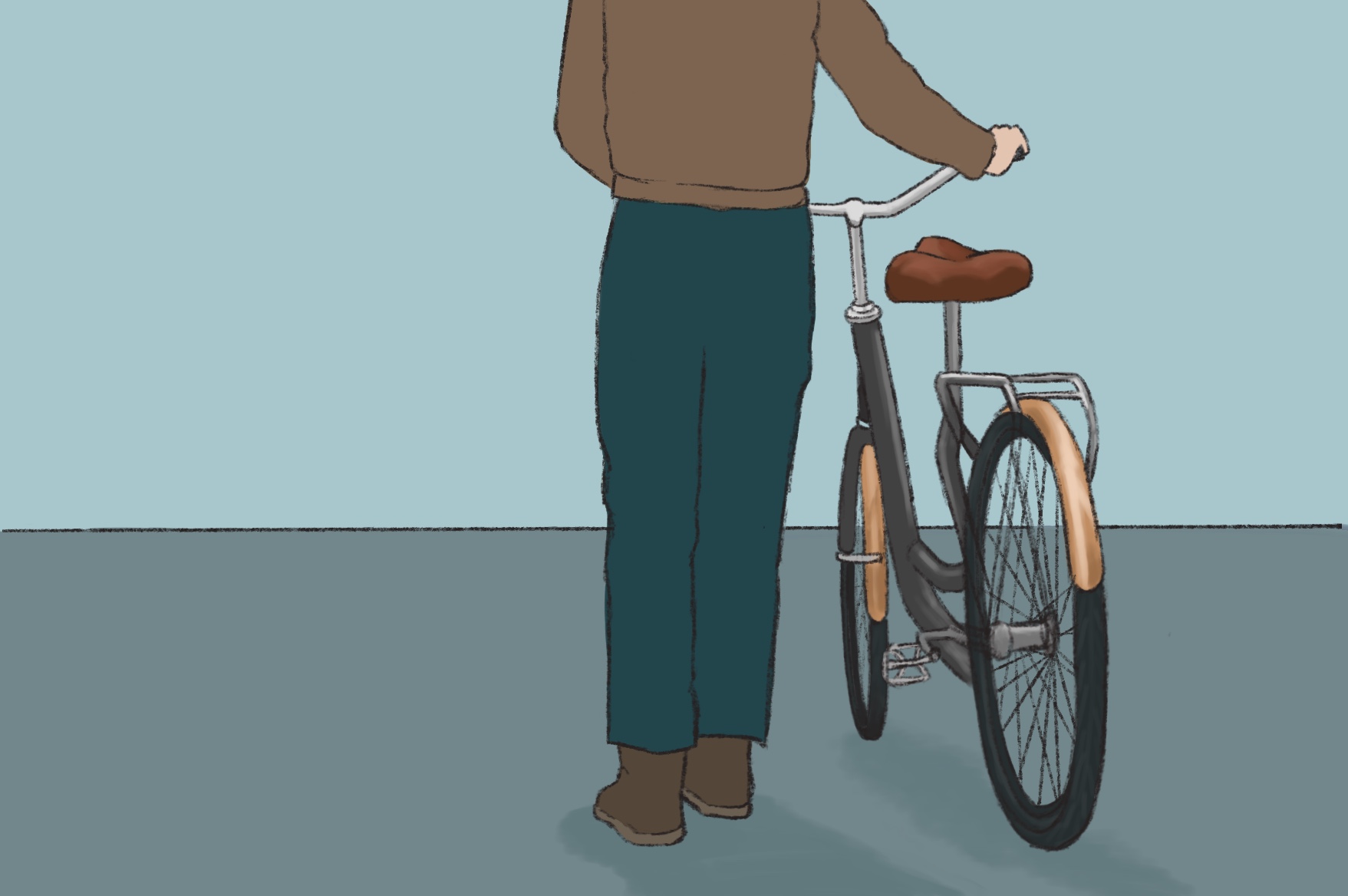


Plastered in bold blue and white font across select walkways around campus are clear “Walk your wheels” signs, banning the use of wheeled transportation in specific areas. Yet, every day, I see bicycles, skateboards or electric-scooters skidding right over them. You would think that college students would be able to understand this simple three-word instruction, but reality begs to differ. The flagrant disregard of this clear campus rule is a danger to both riders and pedestrians.
A recent study of California State University, Sacramento, University of California, Berkeley and University of California, Los Angeles students found that inattention contributed to over 60% of accidents on campus involving pedestrians, and excessive speed contributed to about 23%. College students are especially vulnerable to these risks of inattention and excessive speed. When sleep-deprived and desperately attempting to get to class on time, it might seem tempting to pedal just a little bit faster than usual, but this excess speed, along with some morning brain fog and chaos, can make for a dangerous combination. Imagine if this was a situation with a car instead: speeding past the limit while driving distracted is almost certain to result in a nasty ticket from the police, and, even worse, an accident.
In the California study, many of the accidents were caused by bikes, skateboards and scooters on mixed-use pathways. Especially in areas with few dedicated bike lanes, such as where Case Western Reserve University is located in Cleveland, mixed-use paths are vital to bike infrastructure. But this need for infrastructure must be balanced with the associated increased risk of accidents. This is exactly where the “Walk your wheels” zones come into play: they protect the most high-risk areas. All of these zones are located in campus activity hubs that pose significant risk of pedestrian collision, such as the Case Quad, with its high-density pedestrian traffic, or the walkway next to the Tinkham Veale University Center, due to its narrow walkway and low-visibility corners.
Balancing the needs and safety of all commuters on campus is difficult, but rules such as “Walk your wheels” do so effectively, allowing relative freedom for bikers while ensuring pedestrian safety in key areas. However, that’s only if people actually follow the rules. It’s not even difficult to follow them either. When you come across a “Walk your wheels” zone, just dismount and walk. If you’re on the Case Quad, you can ride to the perimeter and walk through the interior to your class as usual. On the path next to Tink, you can choose to ride an alternate path around that one area. The mere 60 seconds extra it takes to do so ensures the safety of far more than 60 other students.
To all bikers, scooter riders, skateboarders and roller bladers, please remember: just walk your wheels for the sake of everyone’s safety.