


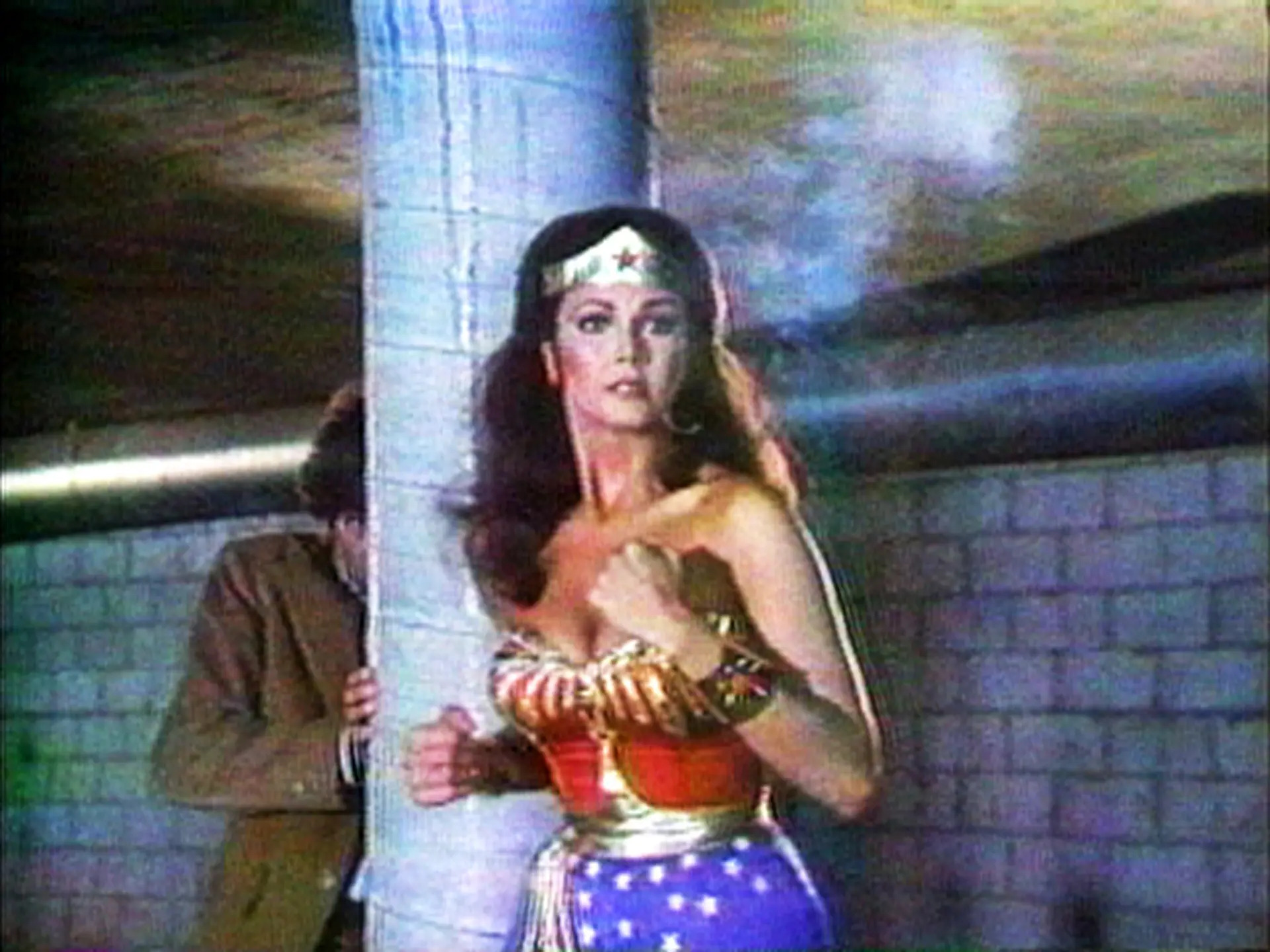
After bouncing around from museum to museum, Dara Birnbaum’s “Technology/Transformation: Wonder Woman” exhibit has finally reached the Cleveland Museum of Art. The six-minute-long video, short but striking, is famous for how it combines pop culture television with gender representation. Created between 1978 and 1979, the short film reworks footage from “Wonder Woman” (1975) into a tightly edited loop that challenges the concepts of power and heroism.
Birnbaum focuses on one of the most famous moments of the show: the transformation sequence where Diana Prince spins and transforms into Wonder Woman. In the original TV show, the scene serves as a quick, visual transition to signal the upcoming action and excitement. In Birnbaum’s version, the same sequence plays over and over again, turning a normally-overlooked moment into something more unsettling and worth noticing.
By isolating the transformation, Birnbaum draws attention to how television creates meaning through editing, sound and repetition. The spin, flashing lights and signature dramatic pose become more than just entertainment. As the loop continues, the transformation loses its charm and starts to feel mechanical and automatic. Prince’s superhero identity appears less like an expression of personal power and more like a commodity, something that was assembled by the camera.
This piece emerged during a period when artists were increasingly hijacking video to respond to mass media. In the late 1970s, television was a culturally dominant force that changed how audiences understood politics, gender roles and celebrities. Birnbaum was one of these artists who treated television as material that could be edited, rearranged and questioned instead of just a neutral source of images. Television could make a statement.
Gender representation is the center of “Technology/Transformation: Wonder Woman.” Wonder Woman was often celebrated as a symbol of female empowerment, yet Birnbaum’s editing complicates that. The transformation emphasizes Wonder Woman’s appearance, novelty and visibility as it changes her from a shy secretary to one of the most powerful and glamorous beings on the planet. Her perceived power is linked to how she is displayed and how often that display is seen. As I watched the sequence loop, the emphasis on performance became difficult to ignore. Birnbaum’s work doesn’t dismiss Wonder Woman as a powerful (female) superhero, but it makes viewers wonder about the conditions in which her power is presented on TV.
In a museum, the video comes across differently than it would on a regular TV screen. The Cleveland Museum of Art encourages viewers to sit, watch closely and engage with the film with no distractions. The focus is central to Birnbaum’s objective as the gallery asks viewers to slow down and notice details that would otherwise be missed. Sound is a surprising player in shaping the viewing experience. The audio reinforces the intensity of the edited visuals, contributing to a sense of urgency that is borderline overwhelming. The original excitement of seeing and hearing Diana Prince become Wonder Woman fades as you watch it over and over, going from thrilling to insistent to exhausting. This effect mirrors how TV uses sound and rhythm to hold attention beyond just video.
Despite being created over four decades ago, “Technology/Transformation: Wonder Woman” remains relevant as a political thinkpiece in today’s media landscape. While there is much to be said about watching Wonder Woman’s transformation and how it ties into expectations and preconceived ideas about female power, the editing style of the piece alone is noteworthy. Digital platforms rely heavily on repetition, looping videos and recognizable visuals. Gestures, poses and narratives circulate rapidly while often detached from their original contexts. Birnbaum’s work highlights this condition by showing how repetition can drain images of individuality and turn them into standardized signals.
The piece offers both a historical snapshot and a spotlight on the present. It reflects a moment when artists began critically engaging with television as a powerful cultural force while also speaking about the current state of media saturation and image control. Dara Birnbaum’s “Technology/Transformation: Wonder Woman” reminds us that even the most familiar images can be re-examined and how often we see something can be just as important as what we see.