
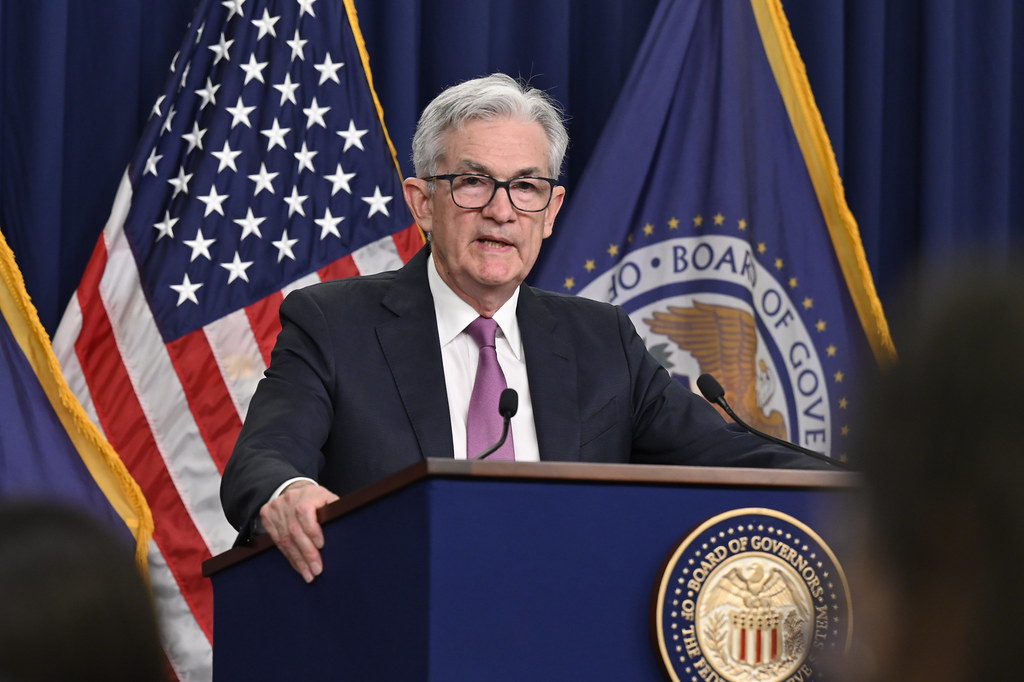
President Donald Trump has been consistently pressuring the United States Federal Reserve since the beginning of his term last January. Aside from numerous comments on Truth Social and other platforms, his most notable move was the attempted firing of Board of Governors member Lisa D. Cook in August 2025. That changed last week when the administration threatened the chair, Jerome Powell, with criminal indictment.
Like Cook’s alleged mortgage fraud, the investigation concerns real estate. The Department of Justice points to Powell’s testimony last summer involving the ongoing renovation of Fed office buildings as the source of the crime.
The charges mark the president’s most aggressive move so far in his ongoing push for the Central Bank to lower interest rates, an encroachment on the Fed’s traditionally independent, non-partisan role. Legal experts doubt that the case will hold much ground, but the White House is not examining exceeded budgets and construction details on the grounds of legal authority. Instead, they are doing so in an effort to erode the public’s trust in Powell and force him to cave. Despite the lack of a case, the traditionally professional, non-confrontational chairman seems to have finally reached his limit.
“This is about whether the Fed will be able to continue to set interest rates based on evidence and economic conditions—or whether instead monetary policy will be directed by political pressure or intimidation,” he said in a video statement about the investigation, blatantly calling the charges a political maneuver. Others in powerful roles have not been so confrontational when dealing with the president. But it seems like Powell has the leverage to take a stand.
After the Department of Justice revealed its ongoing investigation, issuing multiple subpoenas, Trump felt the financial pressure. Stocks fell, the dollar weakened and markers of inflation and credibility fears—such as the price of gold and long-term bond yields—rose. The market only recovered quickly due to Powell’s reassurance, and this is only a taste of how markets would react if the Fed’s independence were seriously undermined. The world’s trust in the Fed’s ability to regulate the world’s largest economy is a key reason for the widespread stability of the dollar and the U.S. Treasury market. These benchmarks are seen as safe-haven investments—in part due to trust in the Fed to make its decisions based on data and evidence, not the whims of politicians.
A negative reaction from markets would spell disaster for Trump, who is struggling to stimulate the economy in time for the midterm elections. This motivation seems to be a major reason why he keeps pushing for rate cuts: to keep the economy booming even at the risk of major inflation.
Despite his motivations, his move startled many Republicans, who find it hard to risk major economic instability. Republican representatives have actively spoken out in defense of Powell, and officials of the Trump administration have distanced themselves from the investigation, including Trump himself. Notably, GOP Senator Thom Tillis of North Carolina, a member of the Banking Committee set to approve Trump’s nominee for the position of Fed chair in May, said he would oppose any candidate until this case is resolved, leaving the committee in a tie.
The stalling of this nomination could also shake up markets. According to Adam Posen, the president of the Peterson Institute for International Economics, a prolonged fight over Powell’s replacement could lead to “split votes and no clear direction.” An insecure Fed could impact markets without any action. Much of the Fed’s power doesn’t come from action, but from belief. Markets move due to expectations of what the Fed will do, and unpredictability can weaken the certainty of these expectations.
Replacement uncertainty could also be destabilizing. Though Powell’s term as chair will be up in May, it is unclear whether he will be leaving his seat on the Board of Governors. Despite being appointed by Trump in his first term, Powell has been an advocate for Central Bank independence and stable monetary policy. As a highly respected and experienced economist, his choosing to stay could undermine the foothold within the Fed that Trump stands to gain with his appointment of the next chair.
However, the outcome of Lisa D. Cook’s court case could change everything. The Supreme Court is set to start hearing oral arguments in late January. If the court rules against Cook, it could set a significant precedent about the firing of Fed officials by the president that could make it more beholden to the Executive branch.
Overall, this is a time of great uncertainty for the U.S. Economy. Trump’s heavy-handed involvement with the Federal Reserve has opened possibilities for increased presidential power that previous presidents have never dared to touch. And the threat of unstable markets is a constant one. However, Powell encourages citizens that the Fed will continue to stand independently, helping the U.S. weather the unpredictable fluctuations of the global economy.
“Public service sometimes requires standing firm in the face of threats. I will continue to do the job the Senate confirmed me to do, with integrity and a commitment to serving the American people.”