

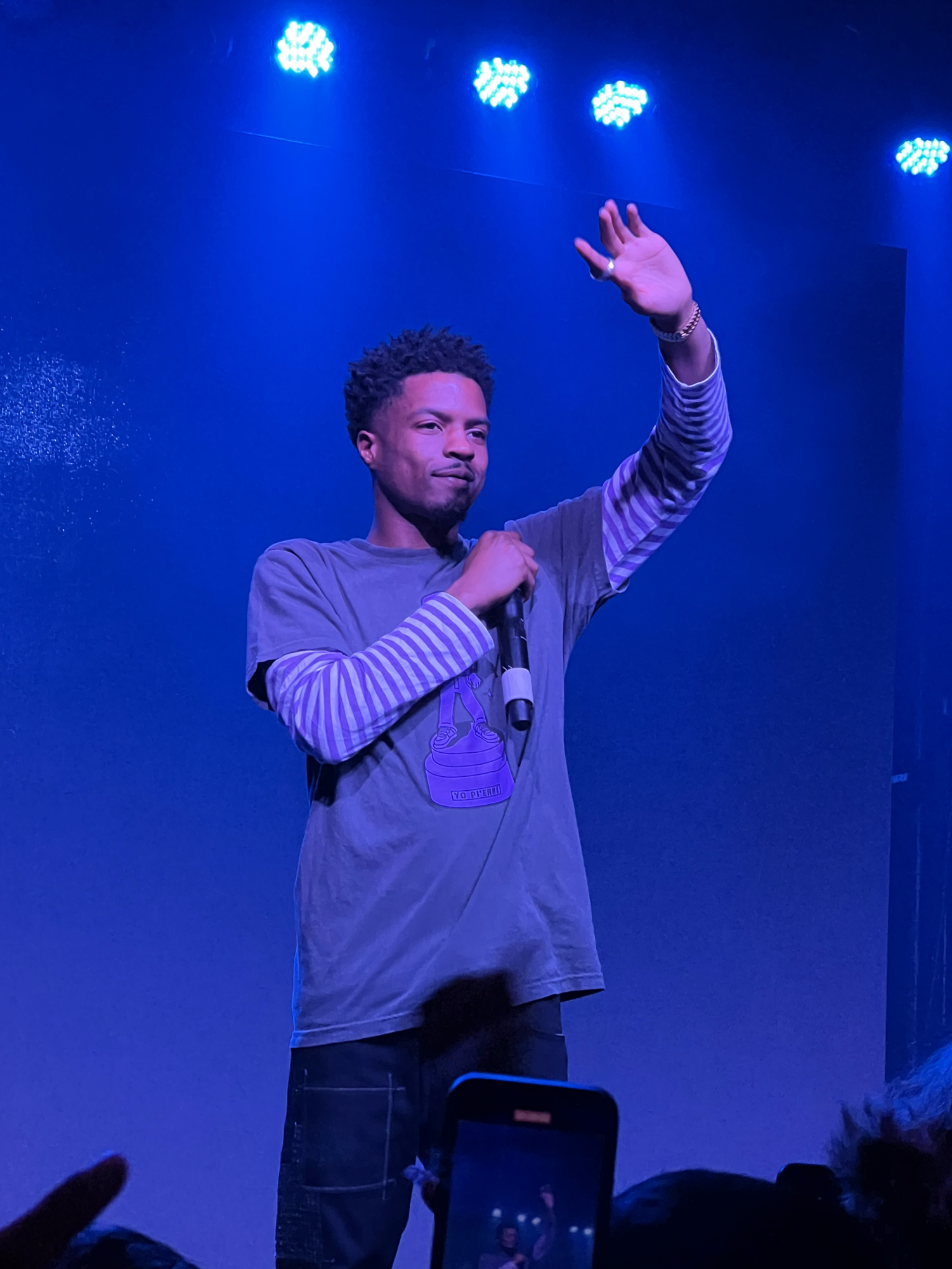
Pi’erre Bourne, born Jordan Timothy Jenks on September 19, 1993, in Fort Riley, Kansas, has become one of the most, if not the most, influential figures in modern music production. Having been raised in the Carolinas for most of his childhood, Pi’erre’s environment uniquely blends Atlanta Trap while preserving a taste of the 90s through diverse sampling. From this exposure to miscellaneous genres of music, he was able to pen a discography that would later define an entire generation of hip-hop. Alongside his uncle Dwight, Pi’erre would often visit Atlanta every summer and enjoyed learning about his career as a sound engineer. This introduction to music software fostered discipline as he worked by himself to learn the logistics of beat production. What began as a hobby of experimenting with beats on FL Studio quickly turned into a passion that would define his career.
From an early age, Pi’erre was captivated by producers like Kanye West and Pharrell Williams: artists who not only made beats but built worlds with their voices. Inspired by Kanye’s “The College Dropout,” Pi’erre dreamed of fusing soulful samples with futuristic trap energy. Initially, associating with model Ian Connor allowed him to plan his work out with big stars, aligning himself with ASAP Mob and planning to work behind the scenes as a producer. Pi’erre never expected to become a household name, but his distinct sound would eventually push him to the forefront of rap culture.
Pi’erre’s early career began humbly while working as an engineer for Epic Records with up-and-coming artists, including Young Nudy and Playboi Carti. His signature sound—bouncy 808s, crisp hi-hats and airy, melodic synths—set him apart. Pi’erre’s beats often felt light and dreamy, yet hard-hitting, a combination that made artists eager to work with him. Pi’erre began circulating his “Yo Pi’erre, you wanna come out here?” producer tag, sampled from an episode of “The Jamie Foxx Show.” That five-second clip would soon become one of the most recognizable sounds in hip-hop history.
The turning point came in 2017 with Playboi Carti’s hit single “Magnolia.” The track, driven by Pi’erre’s hypnotic flute melody and thunderous percussion, became an anthem of rap music in 2017. It dominated clubs, radio and social media, cementing both Carti and Pi’erre as leaders of a new generation. Practically overnight, the “Yo Pi’erre” tag became synonymous with hits. The sound was so popular with the younger generation that people would often say the tag without knowing the origin. From then on, his name was everywhere—Lil Uzi Vert, Young Thug, 21 Savage and Travis Scott all wanted his touch. He wasn’t just producing beats; he was redefining the sound of trap.
Pi’erre Bourne’s production style became one of the most recognizable sounds in modern rap. His beats are full of catchy melodies, which contrast the producer norm of darker beats. Pi’erre created something more colorful and fun, with some of his songs sounding like they belong in a video game. You can hear this clearly in “Mileage,” where the beat feels bright and energetic, but still has the bounce of trap. This mix of soft sounds and strong drums made him stand out and inspired what fans call the “Pi’erre wave.” Soon other producers began copying his new and exciting style.
Eventually Pi’erre decided to make music as a solo artist. He released his own album series called “The Life of Pi’erre” (TLOP). The first one, “TLOP 1” (2016), introduced his melodic voice and style of rapping over his own beats. “TLOP 2” (2016) sounded cleaner, with songs like “Harry Potter” showing his growing confidence. “TLOP 3” (2016) helped him reach more people and proved he could carry a project on his own. “TLOP 4” (2019) became his breakout album with “Guillotine” being one of his most loved songs. Finally, “TLOP 5” (2021) showed his growth as both a rapper and producer with songs like “Hulu” that sound fully polished and complete. Across all five albums you can hear how he kept improving while staying true to his unique sound.
After the “TLOP” series, Pi’erre kept making new projects like “Yo!88” with TM88 and “Good Movie” in 2022. His single “Pop Out” showed he still had new ideas and energy. But his career also had problems.
After his success with Playboi Carti, label disputes and creative differences slowed his momentum. Some fans viewed this as him “falling off,” especially as Carti’s fame skyrocketed with “Whole Lotta Red.” Still, many recognized that Pi’erre had already changed the sound of rap—and his quiet consistency kept him influential. The underground continued to look up to him, and his melodic trap blueprint remained the foundation for a new wave of producers and artists.
Pi’erre then started his own label called SossHouse under Interscope Records. It became a place where new artists could experiment and grow while keeping their independence. He signed Chavo and Sharc, who both fit into his melodic and spacey trap sound. Their songs “Michigan” and “Drunk And Nasty”
show how Pi’erre’s style could be shared without losing what made it special. Through SossHouse, he also encouraged a new kind of artist who both raps and produces. His success showed that making your own beats could be just as powerful as rapping on someone else’s.
In the current underground scene, you can see his influence in artists like Che, Prettifun, Autumn!, Jaydes and 1oneam, all of whom mix sleek, digital production with emotionally charged vocals. They use the same kind of smooth synths and steady drums that Pi’erre helped make popular.
This new wave of producers-turned-artists reflects the “Pi’erre effect”: a generation raised on his beats, now crafting their own. His work showed that producers didn’t have to stay behind the boards; they could build entire sonic identities. In many ways, the sound of today’s underground, spacey synths, gliding 808s and the Pluggnb genre, can be traced back to Pi’erre Bourne’s pioneering approach and the community he built around it.
Although Pi’erre Bourne didn’t directly create Pluggnb, his influence on the genre is incontestable. His spacey production style laid the groundwork for the sound that later defined Pluggnb. Producers like Summrs, Autumn! and Goyxrd built upon Pi’erre’s foundation, fusing his dreamlike trap melodies with R&B-inspired chords and emotional tones. In this way, Pi’erre became the blueprint for a new generation of self-producing artists, shaping the atmosphere and rhythm that continue to define the modern underground scene.
Today, Pi’erre Bourne’s impact is hard to imagine since many people are confined to mainstream music pools and often do not dive into what is known as the underground. For people who know, his sound defined an era and continues to influence the next generation of trap artists and even beyond. Even if the mainstream spotlight shifted, his blueprint will always exist. As long as rap continues to evolve, Pi’erre’s DNA will remain woven into its structure.
In the end, Pi’erre Bourne isn’t just another name in the trap scene. He’s the architect of a sound that redefined an era. His tinkering with beats to the status of a global innovator proves how far creativity and perseverance can go. Whether in the studio or on stage, his legacy resonates in every “Yo Pi’erre, you wanna come out here?” that echoes through speakers around the world.
Recommendations for new listeners:
“Guillotine” (TLOP 4)
“Making Good Decisions” (TLOP 1)
“Harry Potter” (TLOP 2)
“Hulu” (TLOP 5)
“Toot It Up” (Made in Paris)
“NY in June” (Grails)
“Marie Curie” (single)
“Michael Phelps” (single)
“Pop Out” (Yo!88)
“Quicksand” (Pi’erre & Cardo’s Wild Adventure)