

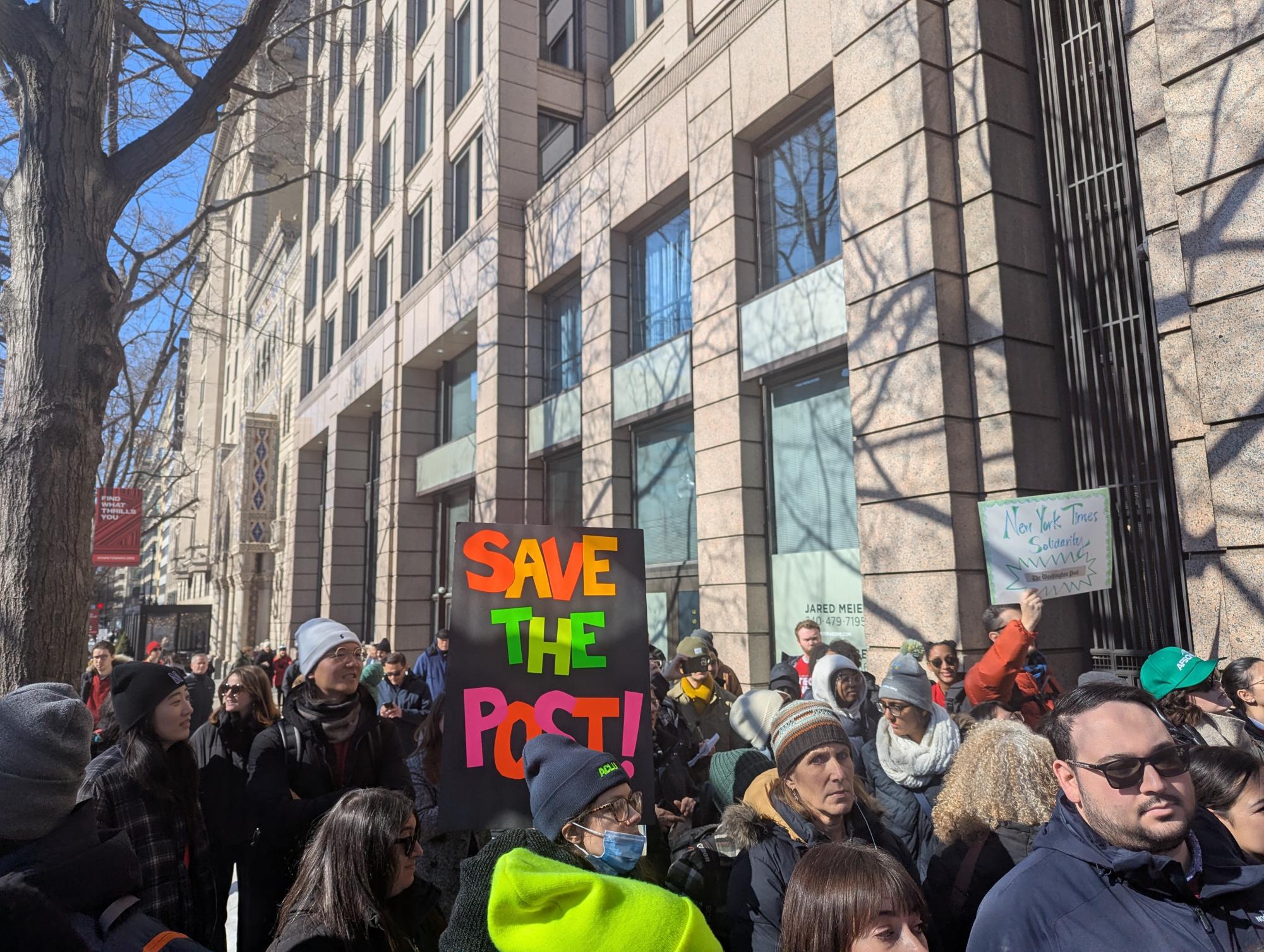
Through an online meeting on Feb. 4, The Washington Post’s executive editor Matt Murray informed the publication’s staff that hundreds of journalists—roughly a third of The Post’s workforce—would be cut from their roles in the newsroom. The decision came as part of an ongoing effort to sustain The Post and cut back on its declining revenue, sparking backlash from reporters across the industry. Just days after this massive layoff, Will Lewis, chief executive officer, stepped down from his position.
These layoffs didn’t come as a surprise, but rather as a culmination of The Post’s ongoing financial issues in subscriptions and sales. This is partly due to its refusal to endorse a candidate during the 2024 election, breaking a tradition of endorsing presidents for over 30 years. Over 200,000 subscriptions were reportedly cancelled in response. In hindsight, this loss hurt its journalists more than billionaire Jeff Bezos, who bought The Post back in 2013.
Over the years, declines in sales have repeatedly led to highly-criticized staff cuts. Most notably, in 2023, The Post offered voluntary buyouts to reduce its newsroom and business operations workforce by 240 people, including marketing and printing teams. In January 2025, it continued laying off workers from the paper’s noneditorial staff. This series of layoffs points to The Post’s instability in a changing technological landscape.
After the announcement on Feb. 4, the union representing most of the publication’s employees commented on the staff cuts.
“A newsroom cannot be hollowed out without consequences for its credibility, its reach and its future,” the union said. “Continuing to eliminate workers only stands to weaken the newspaper, drive away readers and undercut The Post’s mission: to hold power to account without fear or favor and provide critical information for communities across the region, country and world.”
In a phone call with employees, Murray announced, “Today is about positioning ourselves to become more essential to people’s lives in what is becoming a more crowded and competitive and complicated media landscape.”
He hopes this new cut will allow them to align more closely with news, politics and business, rather than with “less newsworthy” articles. This shift focuses on attracting readers interested in high-impact articles, such as investigative reporting and national politics, and scaling up subscription sales.
However, as a part of this shift, The Post has decided to cut down on sections that many believe are essential to a newspaper. For example, it removed its sports section and scaled back its international news section while The New York Times did the opposite, pulling forward with The Athletic and continuing international coverage.
Some journalists, including Ashley Parker, a former journalist for the publication, have criticized the recent cut, claiming that this will only exacerbate the issue.
“The Post has survived for nearly 150 years, evolving from a hometown family newspaper into an indispensable national institution, and a pillar of the democratic system,” Parker wrote in an essay in The Atlantic. “[But if the paper’s leadership continues down its current path], it may not survive much longer.”
This situation ultimately displays the rapidly-changing news industry and poses questions for the future of journalism at The Washington Post. Will a narrower focus on politics and breaking news attract more readership, or will it continue to bring down interest and threaten its legacy?