


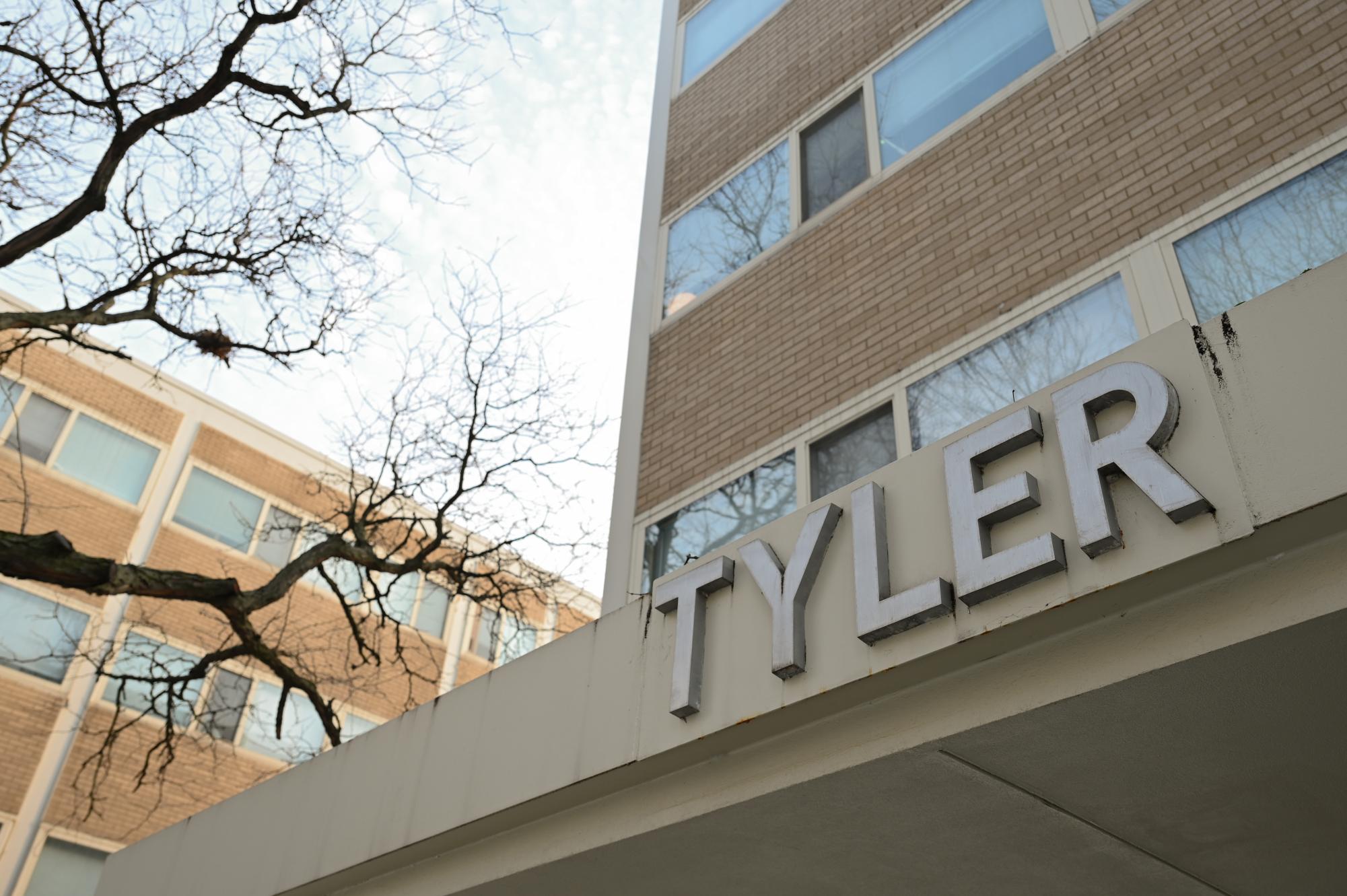
Last week, Case Western Reserve University’s North Residential Village experienced two separate instances of maintenance issues, one in Sherman House and the other in Tyler House.
The first of the two occurred on Saturday, Jan. 31, when the 2nd floor of Sherman House flooded following the failure of a radiator in a student’s room. One student shared a video where water could be seen leaking from the second-floor overhang to the ground outside.
One of the impacted students shared their experience.
“My initial reaction to the flood was a mix of shock and dread as I panicked to figure out a plan for what to do considering the flood happened the weekend before my midterms began,” they said.
Following the flooding, students were evacuated from the building as the emergency maintenance team worked to fix the radiator. Impacted students were provided accommodations for relocation at Hazel Apartments on Euclid.
“The process to get to Hazel took a while, but once we arrived, we figured out our heater wasn’t working, which was a constant issue for the first couple of days. To avoid the cold and have more access to Sherman, I stayed in a friend’s dorm,” the student said.
While those affected found temporary housing, crews worked to address the situation and restore conditions in Sherman for students to move back in. Vern Rogers, executive director of University Housing, noted that the maintenance team was swift in their response.
“Most of the issues were resolved within four to five hours; staff addressed any lingering issues within one to two days,” he said.
Rogers shared that the radiator’s failure was likely caused by the recent temperature drop.
“We don’t know the malfunction’s exact cause, but we expect the extreme cold was a factor,” he said. “Campus Planning and Facilities Management believes an open window in the building allowed the radiator’s water to freeze, which caused the failure.”
To mitigate such events from happening again, university staff recommends students keep their windows closed, particularly with temperatures below freezing.
“Students are asked to keep windows closed during cold weather to prevent this. If a room feels unusually hot or cold, students should submit a work order so the team can respond quickly,” Rogers said.
The impacted student commented on the communication from staff.
“The staff response and updates were honestly a bit minimal, but the RAs put in a lot of work during the whole flooding incident, which I appreciated,” they said. “Unfortunately, we have still had very minimal communication with them, especially with how damaged items are going to be taken care of and how long we were going to stay outside. We were first told one day and then told a week. Besides being told to clear a bit of the floor in our dorms by last Wednesday, we never really got consistent updates with our dorm maintenance.”
Despite concerns about communication, another resident of Sherman House reflected on the situation and stated that they are not concerned about such an incident recurring
“I am not worried about similar situations,” they said. “The resolution to the flooding took a little bit of time, and I think the residents will be more cautious about leaving their windows open.”
Later that week, a separate non-weather-related maintenance issue arose in Tyler House. On Feb. 5, residents of Tyler House received notice of an oil leak. Impacted areas included the “first floor back hallway, back staircase, and part of the laundry room.”
“After a recent elevator repair in Tyler House, a rubber gasket failed and caused a hydraulic fluid leak. The issue was mechanical and not weather-related. Cleanup began the day it was reported,” Rogers said.
A Tyler House resident shared how the leak affected them.
“When I came back from my clinical rotation, I usually do laundry right after, but when I got to Tyler, I found caution tape and maintenance cleaning up the oil spill that covered the common area up to the kitchen,” first-year Nathan Chung said.
Both Sherman and Tyler House are part of the first-year Mistletoe Residential Community and are slated for renovations this summer. However, the radiators will not be a part of the renovations, which are focused on “modernizing the bathrooms, adding new piping and ventilation and upgrading the common areas.”
“The radiators are original to the buildings and flushed every summer to ensure proper operation,” Rogers said. “Current first-year building renovations do not involve replacing the radiator systems.”
For residents, the week was an unexpected interruption during the start of midterms, but classes and daily routines have since returned to normal as repairs wrapped up across North Residential Village.