


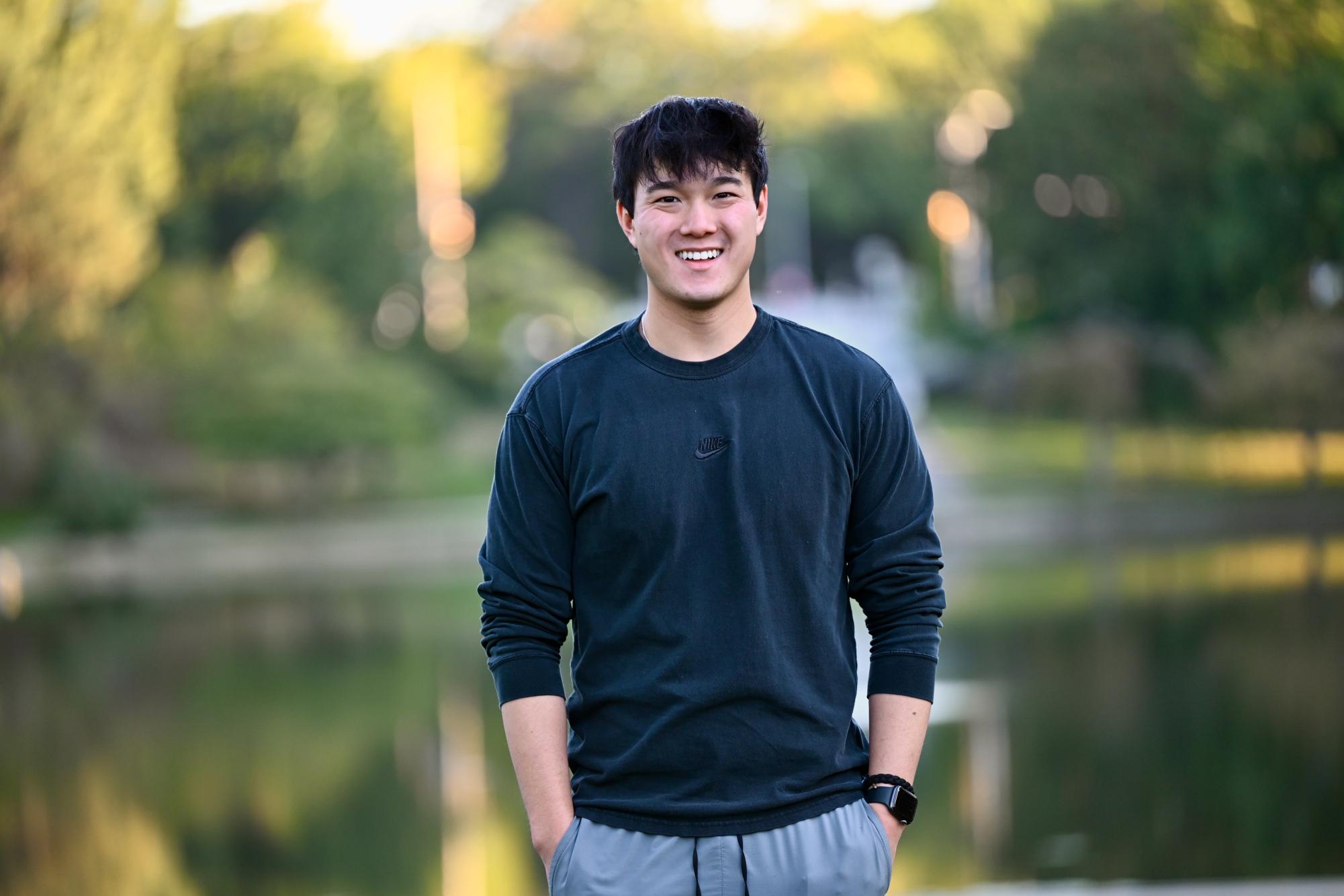
I never really thought I’d be part of this for that long. I applied to The Observer before I had even unpacked a single box in my freshman dorm. I didn’t really know what I wanted to get out of it. I just knew that I was coming to a school built around science and engineering, and I wanted to do something that existed outside of that. Turns out, it would see me through more changes that I could have predicted.
My initial interview was with former Executive Editor Shreyas Banerjee and Director of Print Sara Khorshidi in 2022. The interview itself was pretty bad. I lost connection five different times. I joined from three different devices. It took a full 30 minutes before we could even start. Sara ended up pulling me toward a graphic design position because of my background in art, so I went for that. I figured physical art would translate well to digital. That just ended up being wrong. I was pretty bad.
What followed was a first and second year I can only describe as a blackout. I have no real memory of it. All I can tell you is that we got pizzaBOGO almost every week and I would draw graphics and leave. I didn’t really think I had a passion for it, and I think somewhere underneath that I knew something was off.
By my third year, I had finally accepted that something needed to change. One of our current Directors of Design, Lucas Yang, had just joined and was amazing at graphic design. On the other hand, I had reached a point where I was going to explode if I had to open Procreate one more time and draw another banner. With the help of my good friend Auden Koetters (second longest standing Editorial Board member, not that I’m keeping track), Director of Design at the time, I finally made the switch to layout design. I wanted to find something I could actually care about—and it turned out that thing was less about putting words or art on a page and more about making the page itself work. The Observer was still there. Just in a different form.
It was also around this time that Executive Editor Shivangi Nanda started pushing harder for bonding within the Editorial Board, and I’m grateful she did. Before that, I think most of us floated through production nights without fully landing anywhere. Shivangi had this way of making everyone feel like they were supposed to be there, like the paper was genuinely theirs.
I also have to note that the current Directors are one of the tightest groups I’ve seen in any organization at this school, and I think a lot of that traces back to what Shivangi built—and maybe also to the fact that everyone here chose this on top of everything else CWRU already asks of you. That, and being together for more than 15 hours a week.
Then came my fourth year and the title of Director of Business Operations, which sounds impressive until you hear what the department looked like when I inherited it. Everything had to be rebuilt from scratch: the media kit, the advertising relationships, the whole infrastructure of how the operation was supposed to run. It was, without question, the hardest thing I did at CWRU.
The thing I’ll actually carry with me, the thing no job title or rebuilt media kit can account for, are the memories built at 2 a.m., when everyone stopped functioning like normal human beings and became something else entirely. Darcy and Hannah would be heroically trying to finish copy editing while the rest of us made that as difficult as possible. Darcy is one of the most passionate people I’ve ever met—whenever my schedule got too packed this year, she was right there to step in without making it a thing, somehow on top of everything despite having more on her plate than anyone. I first met Hannah when she was trying to be gracious about a pizza graphic I drew for her article about CWRU’s meal plan. It wasn’t a great pizza. The rest of the Executive Board was already joking about it and she was the only one being kind. She’s come a long way from tolerating my art—so has her career at The Observer, from opinion editor to a genuinely great director of print. Opinion is a section where you’re going to hear some rough takes from the writers, and she handled all of it.
Lucas, meanwhile, would spend production nights quietly hating every graphic he made, then produce something that looked like front-page work he’d spent a week on. He is without question the best graphic designer I’ve ever met, and I do want to formally apologize for how many times we asked him to draw something completely insane. Anjali would break into song mid-sentence, mid-layout, all while wrestling with our perpetually glitching InDesign fonts and somehow every week she found a workaround. We were both Layout Designers together under Auden, and I think that shared trench is a big part of why we all got so close. Auden has been with The Observer almost as long as I have and I’ve been a thorn in her side for just about as long. The two of us ran around like toddlers bothering the Editorial Board on zero sleep, finding stuffed animals in the office and throwing them on the Fun page just so we could finally leave for the night. It was rough. It was also, genuinely, some of the best time I have spent with any group of people in my life.
I came to The Observer not really knowing what I was looking for. I left knowing something I don’t think I could have figured out anywhere else: I’m at my best when I’m learning something new, when the role doesn’t quite fit yet and I have to figure it out on the fly. I was bad at graphic design. I was figuring out layout. I was rebuilding a department from scratch. Every single time, something was wrong or broken or on fire and, every single time, I had to think fast and work it out. Turns out that’s not a bug in how I operate. It’s just who I am. Four years and three positions later, I think that’s the most useful thing The Observer ever gave me. It’s seen me through every change I’ve gone through in college.
One final thing because I can’t move on until it’s been said: I do not, and have never, endorsed the fun pages released with me as the face of USG. I was not consulted. I was not warned. I simply showed up one day and there I was. That is on the record now.